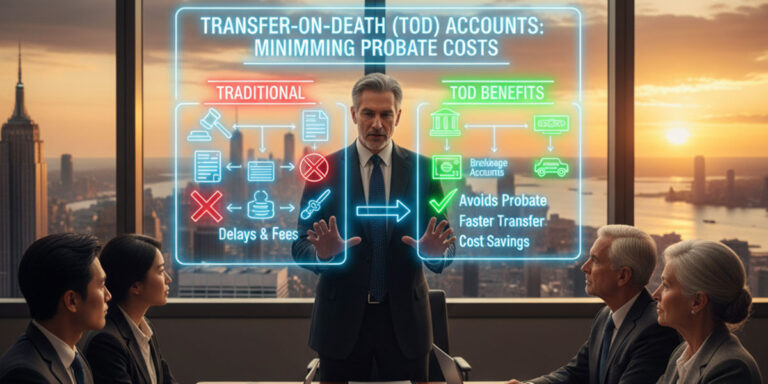
The loss of a loved one brings immense emotional challenges. Amidst this difficult time, families often face the daunting task of settling an estate, a legal journey known in New York as probate. This process involves validating a will, appointing a representative, managing assets and debts, and distributing inheritances. It can feel overwhelming, but understanding each step provides clarity and peace of mind.
At Morgan Legal Group, we offer compassionate and authoritative guidance through every phase of the New York Probate Process. Our dedicated team ensures a streamlined and efficient resolution, allowing you to focus on healing while we handle the legal complexities.
Understanding Probate in New York: A Foundation
Probate is the official legal procedure that confirms the validity of a deceased person’s Last Will and Testament. It also oversees the distribution of their assets, whether they left a will or passed away without one (intestate). New York’s specific laws govern how estates are managed, ensuring creditors receive payment and beneficiaries receive their rightful inheritance. This system protects all parties involved.
Our experienced legal team, led by Russell Morgan, Esq., possesses a deep understanding of New York’s Surrogate’s Court system. We are committed to demystifying this intricate procedure for our clients. Whether you are the designated executor or an heir, skilled legal support is invaluable.
The Pivotal Role of a Will in New York Probate
A Last Will and Testament is a cornerstone of thoughtful estate planning. This crucial legal document clearly outlines your wishes regarding asset distribution and the care of any minor children after your passing. A valid will significantly simplifies the probate journey in New York.
When presented to the Surrogate’s Court, a will undergoes a formal validation process. The court meticulously examines the document to confirm it meets all legal requirements, including proper signing, witnessing, and the testator’s (the person who made the will) mental capacity. Once deemed valid, the court formally admits the will to probate.
The will typically names an executor, also known as a personal representative. This individual is responsible for administering the estate precisely according to the will’s instructions and New York law. Executor duties are extensive, encompassing asset collection, debt and tax payments, and the final distribution of property to named beneficiaries. Without a valid will, the court must appoint an administrator, and the estate will be distributed according to New York’s intestacy laws, which may not align with the deceased’s true intentions.
For those who have not yet established their final wishes, our wills and trusts services are essential. We assist clients in drafting comprehensive wills that clearly express their desires, minimizing potential disputes and ensuring assets pass to loved ones as intended.
Probate Without a Will: New York Intestacy Rules
Dying without a valid will is referred to as dying intestate. In New York, when an estate is intestate, the distribution of assets follows strict state law, specifically the Estates, Powers and Trusts Law (EPTL). The Surrogate’s Court then appoints an administrator to manage the estate. This administrator is often a close family member, such as a spouse or child, but the court makes the ultimate determination.
New York’s intestacy laws define a specific hierarchy of inheritance. For example, if a person dies with a surviving spouse but no children, the spouse typically inherits the entire estate. If there is a spouse and children, the spouse generally receives the first $50,000 and half of the remaining estate, with the children inheriting the other half. This order extends to siblings, parents, and more distant relatives if no immediate family members are identified.
This process can be more intricate and time-consuming than probating an estate with a valid will. It often necessitates extensive genealogical research to locate all legal heirs, and it carries a greater potential for disputes among family members regarding asset distribution. The administrator must still perform many of the same duties as an executor, including inventorying assets, paying debts and taxes, and distributing the estate.
If you are navigating a situation where a loved one has passed without a will, our probate and administration attorneys can guide you through the complexities of intestate succession in New York. We ensure the process is handled equitably and in full compliance with the law.
Navigating the New York Probate Process: Key Steps
The New York Probate Process, whether an estate includes a will or not, generally follows a series of defined stages. While specific details can vary based on estate complexity, these are the common phases:
1. Initiating the Process: The Probate Petition
The journey begins by filing a petition with the Surrogate’s Court in the county where the deceased last resided. If a will exists, the petition asks the court to admit the will to probate and appoint the named executor. If no will is present, the petition requests the appointment of an administrator.
This petition must contain essential information about the deceased, such as their date of death, marital status, and the names of surviving distributees (heirs). It also requires an initial inventory of known estate assets and liabilities.
2. Notifying All Stakeholders: Interested Parties
Once the petition is filed, New York law mandates that all interested parties receive notification. This includes the executor, beneficiaries named in a will, and all legal distributees if the deceased died intestate. Formal legal notices must be served, informing these individuals of the probate proceedings and their right to object.
This notification step is vital for transparency and allows any party believing they have a claim or interest in the estate to come forward. Our firm ensures all parties receive proper notification in accordance with legal requirements.
3. Addressing Challenges: Will Contests and Objections (If Applicable)
In certain situations, a will may face a challenge, known as a will contest. Objections can arise from individuals who believe the will is invalid due to reasons such as undue influence, lack of testamentary capacity, fraud, or improper execution. If a will is contested, the court conducts hearings to resolve the dispute. These proceedings can significantly extend the probate timeline and increase costs.
Our team possesses extensive experience in handling will contests, working to uphold the integrity of a valid will or advocating for the rights of those who believe a will is invalid. We understand the profound emotional and legal sensitivities involved in such matters.
4. Granting Authority: Executor or Administrator Appointment
If no valid objections are raised, or if a will contest concludes in favor of the will, the Surrogate’s Court issues Letters Testamentary (for estates with a will) or Letters of Administration (for intestate estates). These court-issued documents officially empower the executor or administrator to act on behalf of the estate.
The appointed individual can then commence the formal tasks of estate settlement, including accessing bank accounts, managing property, and addressing creditors.
Managing the Estate: Assets, Debts, and Taxes
With court-granted authority, the executor or administrator assumes control of the estate’s assets. This involves a meticulous process of identifying, locating, and valuing all property owned by the deceased. This can encompass real estate, bank accounts, investment portfolios, vehicles, personal belongings, and any business interests.
Simultaneously, the executor or administrator must identify and address the estate’s outstanding debts and liabilities. This includes mortgages, credit card balances, personal loans, medical bills, and taxes. Strict procedures must be followed for notifying creditors and for paying valid claims against the estate.
5. Comprehensive Inventory and Valuation of Assets
A critical step involves creating a detailed inventory of all estate assets. This often requires obtaining professional appraisals for significant assets like real estate, valuable art, or jewelry. The objective is to establish a clear and accurate record of the estate’s total value as of the date of death.
This inventory is typically filed with the Surrogate’s Court and serves as the foundation for tax calculations and the eventual distribution to beneficiaries. It is a precise task demanding careful attention to ensure no assets are overlooked.
6. Settling Financial Obligations: Debts, Taxes, and Expenses
The executor or administrator must settle all legitimate debts of the deceased, administrative expenses (such as legal fees and court costs), and any applicable taxes. In New York, this includes income taxes for the deceased and the estate, as well as potential estate taxes if the estate’s value exceeds specific thresholds. These tax laws apply consistently across all New York counties, including Westchester.
The payment of taxes represents a critical phase. If the estate is subject to New York estate tax, it must be accurately calculated and paid. The current New York estate tax exemption is substantial, but larger estates will certainly be impacted. Understanding these tax obligations is imperative to avoid penalties and ensure correct payment. This is where expert estate planning proves invaluable in minimizing tax burdens.
Consider a family in Westchester whose deceased parent held significant investments. The executor must not only gather statements but also obtain current market valuations for these assets to accurately report them for tax purposes. Furthermore, any outstanding loans secured by these assets must be addressed, potentially requiring the sale of some investments to satisfy debts. For complex estates, this stage can be particularly challenging. Our team assists in managing these financial obligations efficiently and legally, ensuring all requirements are met.
7. Final Distribution to Beneficiaries
Once all debts, taxes, and administrative expenses have been satisfied, the remaining assets are distributed to the beneficiaries or heirs according to the terms of the will or the rules of intestacy. This often occurs through a formal accounting submitted to the court and approved by the beneficiaries.
The executor or administrator then transfers titles to real property, distributes personal property, and disburses any remaining cash. It is crucial that this distribution is carried out precisely as outlined by the will or New York law. Any deviation could lead to legal challenges.
Unique Aspects of New York Probate
New York probate law includes several specific nuances that can influence the process. Understanding these can help individuals prepare for potential complexities.
The Surrogate’s Court: Your Judicial Partner
In New York, probate matters fall under the jurisdiction of the Surrogate’s Court. Each county maintains a Surrogate’s Court, where wills are admitted, executors and administrators are appointed, and estate disputes are resolved. The court’s primary function is to ensure estates are settled according to the law and the deceased’s final wishes.
The Surrogate’s Court plays a vital supervisory role over the executor or administrator. It ensures responsible estate management and that beneficiaries receive their rightful inheritance. Our attorneys are well-versed in the procedures and practices of New York’s Surrogate’s Courts, especially in Westchester County.
Streamlined Solutions: Small Estates (Voluntary Administration)
New York offers a simplified process for small estates, known as voluntary administration. If the gross value of a decedent’s estate (excluding certain assets like jointly owned property or life insurance proceeds paid directly to beneficiaries) falls below a specific threshold, the estate may qualify for this expedited process. As of 2026, this threshold is $50,000. This can substantially reduce the time and cost associated with a full probate.
To utilize voluntary administration, a specific affidavit must be filed with the Surrogate’s Court. This process is generally available for estates passing either through a will or by intestacy. It allows a surviving spouse or close relative to collect and distribute assets without the full scope of a formal probate proceeding. Our probate and administration services include identifying if an estate qualifies for voluntary administration and guiding clients through this efficient process.
Out-of-State Property: Ancillary Probate
Ancillary probate becomes necessary when a New York resident dies owning real property located outside of New York. In such instances, probate proceedings must be initiated in the state or country where the property is situated, and a separate ancillary probate proceeding may be required in New York to manage the remaining assets within the state.
Conversely, if a non-resident owned property in New York, ancillary probate in New York would be required to administer that specific property. This can introduce layers of complexity, demanding coordination between different jurisdictions and legal systems. Our firm can assist with ancillary probate matters involving New York real estate.
Navigating Potential Hurdles in the New York Probate Process
While the probate process aims for order, several common challenges can emerge, requiring careful legal navigation.
Resolving Disputes: Estate Litigation
Disputes among beneficiaries or heirs are, unfortunately, common. These conflicts can stem from disagreements over a will’s interpretation, challenges to its validity, disputes over asset valuation, or accusations of executor misconduct. Such litigation can significantly prolong the probate process and escalate costs.
Our team excels at resolving estate disputes, whether through negotiation, mediation, or litigation. We strive to protect our clients’ interests while seeking amicable resolutions whenever possible. We also advise on how robust estate planning can help minimize the likelihood of such disputes.
Finding Heirs: Locating Beneficiaries
Sometimes, beneficiaries or heirs named in a will, or those entitled to inherit under intestacy laws, cannot be easily located. This can occur if individuals have moved without leaving forwarding addresses or if family relationships are strained. The executor or administrator has a legal obligation to make reasonable efforts to find these individuals.
This often involves employing skip tracers or conducting genealogical research, which can be time-consuming and expensive. If heirs remain unfound, the court may require the assets to be held in an unclaimed property fund.
Complex Asset Management in Probate
Estates containing complex assets, such as closely held businesses, intellectual property, or significant real estate holdings, demand specialized knowledge. Valuing and managing these assets, and then distributing them, can be intricate. For example, liquidating a business might involve finding a buyer, negotiating terms, and ensuring a smooth transition, all while adhering to probate court procedures.
Our firm has extensive experience with estates involving diverse and complicated assets. We collaborate with valuation experts and other professionals to ensure these assets are handled appropriately. We also advise on the creation of trusts that can hold and manage complex assets more effectively, both during life and after death.
Executor’s Critical Role and Responsibilities
The executor or administrator holds a fiduciary duty to act in the best interests of the estate and its beneficiaries. This means managing assets prudently, acting impartially, and making decisions with utmost care. Failure to fulfill these duties can result in personal liability for the executor or administrator.
For instance, an executor who mismanages estate funds, pays out assets prematurely before debts are settled, or engages in self-dealing can be held accountable for any losses incurred by the estate. It is crucial for executors to fully understand their responsibilities and to seek legal counsel to avoid potential pitfalls. Our firm provides comprehensive guidance to executors, helping them navigate their duties and mitigate risks.
Why Choose Morgan Legal Group for Your New York Probate Process
Navigating the New York Probate Process can be daunting. The legal requirements, court procedures, and potential for disputes demand expert legal assistance. Morgan Legal Group is dedicated to providing compassionate, professional, and effective legal services to help you manage your loved one’s estate with confidence.
Our team of experienced attorneys understands the emotional toll of losing a loved one. We commit to simplifying the legal complexities, allowing you to focus on healing and remembrance. Whether you are the executor of a will, an heir, or facing a contested probate matter, we offer tailored support designed for your unique situation.
We assist with every critical aspect of the probate process, including:
- Filing necessary documents with the Surrogate’s Court.
- Notifying interested parties and managing all communications.
- Representing clients in will contests and other estate litigation.
- Identifying, valuing, and meticulously managing estate assets.
- Resolving debts and navigating tax obligations efficiently.
- Facilitating the timely and accurate distribution of assets to beneficiaries.
Our expertise extends to various areas of estate law, including estate planning, wills and trusts, and elder law. We firmly believe that proactive planning often prevents many probate complications. This includes ensuring your power of attorney documents are in order and that you have considered all facets of your estate.
We are also experienced in handling matters related to guardianship and addressing potential elder abuse, issues that frequently intersect with estate planning and administration. Our comprehensive approach ensures all your legal needs receive meticulous attention.
Your Next Step: Securing Peace of Mind
For families across New York, including Westchester County, understanding the New York Probate Process is the initial step toward resolution. We strongly encourage you to seek professional legal guidance. Our goal is to provide you with the clarity and support necessary to honor your loved one’s legacy and secure your family’s future.
If you require assistance with probate or any other estate-related legal matter in New York, please do not hesitate to contact Morgan Legal Group. We are here to help you navigate these important decisions with confidence and care. Consider scheduling a consultation to discuss your specific situation.
Schedule Your Consultation Today
Our commitment is to provide you with the highest level of legal service. We understand the profound importance of your estate matters and are dedicated to achieving the best possible outcome for you and your loved ones. For any questions regarding the probate process, or to explore your estate planning needs, our team stands ready to assist.
We also recognize that estate planning can sometimes involve complex family law considerations, especially for blended families or those with specific inheritance goals. Our firm is equipped to handle these interdisciplinary issues with sensitivity and expertise.
We proudly serve clients throughout New York, including the entirety of Westchester County. Our deep understanding of New York’s probate laws is our expertise. We are committed to making this process as smooth and stress-free as possible for you.
Contact Us today for a comprehensive review of your estate needs or to begin the probate process.
For those in the New York City metropolitan area, our profound understanding of local Surrogate’s Courts and estate administration practices proves invaluable. We are your trusted partners in navigating these essential legal processes. You can also review our Google My Business profile for additional information and client reviews.
For official information on the court system, visit the New York State Unified Court System – Surrogate’s Court.