Navigating Probate in Westchester County: Your Guide to Estate Administration
Losing a loved one is an incredibly difficult time. Amidst grief, the complex legal process of probate can feel overwhelming, especially if the deceased resided in Westchester County. Understanding this process is crucial to ensure your loved one’s assets are distributed according to their wishes and New York law. At Morgan Legal Group, our experienced probate lawyers in Westchester County are dedicated to guiding families through this challenging period with compassion and expertise.
Probate is the legal process by which a deceased person’s will is validated and their estate is administered. This involves identifying and valuing assets, paying debts and taxes, and distributing the remaining property to the rightful beneficiaries. For many, the prospect of navigating court procedures, legal jargon, and financial matters is daunting. That’s where the specialized knowledge of a Westchester probate lawyer becomes invaluable. We help streamline this process, minimizing stress and ensuring legal compliance.
The laws governing probate can be intricate. They dictate how wills are handled, how assets are managed, and how disputes are resolved. Without proper legal counsel, errors can occur, leading to delays, increased costs, or even legal challenges that can further complicate an already sensitive situation. Our firm understands the nuances of New York’s Surrogate’s Court procedures, which preside over probate matters in Westchester County and beyond.
This comprehensive guide will walk you through the essential aspects of probate in Westchester County. We will cover what probate entails, when it is necessary, the typical steps involved, and how our firm can provide critical support. Our goal is to demystify the probate process, empowering you with the knowledge to make informed decisions during this difficult time.
What is Probate and Why is it Necessary in Westchester County?
Probate is the court-supervised process that validates a deceased person’s will and oversees the distribution of their assets. In essence, it’s the legal mechanism that ensures a deceased individual’s final wishes are carried out responsibly and according to law. This process takes place in the Surrogate’s Court in the county where the deceased was domiciled, which for many would be Westchester County.
The primary purposes of probate are to:
- Validate the deceased’s will.
- Appoint an executor or administrator to manage the estate.
- Identify and inventory all assets of the estate.
- Pay outstanding debts, taxes, and administrative expenses.
- Distribute the remaining assets to the beneficiaries named in the will or, if there is no will, to the legal heirs according to New York intestacy laws.
Even if a person has a well-drafted will, the probate process is often still required. The court’s role is to ensure that the will is authentic and that all legal requirements are met before assets are transferred. This safeguard protects against fraud and ensures that all legitimate claims against the estate are addressed.
For assets that do not pass directly to beneficiaries through mechanisms like joint ownership or beneficiary designations (e.g., life insurance policies or retirement accounts with named beneficiaries), probate is typically necessary. Understanding which assets fall under probate and which do not is a critical first step, and a probate lawyer in Westchester can provide this clarity.
When is Probate Required for Westchester Residents?
The necessity of probate hinges on the types of assets a deceased individual owned and how those assets were titled. In Westchester County, as elsewhere in New York, certain assets bypass the probate process entirely.
Assets that generally do not require probate include:
- Assets held in joint tenancy with rights of survivorship.
- Assets held in a trust.
- Life insurance policies with a named beneficiary.
- Retirement accounts (like 401(k)s or IRAs) with a named beneficiary.
- Accounts with payable-on-death (POD) or transfer-on-death (TOD) designations.
Conversely, assets titled solely in the deceased’s name without any of the above features typically must go through probate. This often includes:
- Bank accounts held solely by the deceased.
- Real estate owned solely by the deceased or as tenants in common.
- Stocks and bonds held in the deceased’s name.
- Personal property (vehicles, jewelry, art) that is not otherwise designated.
If the deceased lived in Westchester County and owned assets that require probate, the process will commence in the Westchester County Surrogate’s Court. Even for smaller estates, understanding the thresholds for simplified administration is important. Our estate planning attorneys can help structure your assets to minimize or avoid probate altogether, a crucial consideration during the planning phase.
If the deceased did not leave a will (died intestate), the court will appoint an administrator to settle the estate according to New York’s intestacy laws. This process is also supervised by the Surrogate’s Court and requires careful adherence to legal procedures. Having a Westchester probate attorney can ensure this administration is handled correctly, even without a will.
The Probate Process in Westchester County: Step-by-Step
While the specifics can vary, the probate process in Westchester County generally follows a predictable sequence. Understanding these steps can help manage expectations and prepare for the tasks involved. Navigating this journey without expert assistance can be challenging, which is why retaining a knowledgeable probate lawyer is highly recommended.
1. Filing the Will and Petition with the Court
If a will exists, the executor named in the will (or another interested party) files the original will along with a petition for probate in the Westchester County Surrogate’s Court. This petition formally requests the court to recognize the will as valid and to appoint the executor. Supporting documents, such as a death certificate and an inventory of known assets, are typically submitted.
2. Notifying Interested Parties
New York law requires that all individuals who have an interest in the estate be notified of the probate proceedings. This includes the beneficiaries named in the will, as well as the distributees (heirs-at-law) who would inherit if there were no will. Proper legal notice ensures that all parties have an opportunity to object to the will or raise concerns. Our firm ensures all statutory notice requirements are meticulously met.
3. Will Contest and Objections (If Any)
In some cases, an interested party may choose to contest the validity of the will. Common grounds for contesting a will include claims of undue influence, lack of testamentary capacity, fraud, or improper execution. If a will contest arises, the probate process can become significantly more complex and time-consuming. A skilled estate planning attorney can help draft documents that are less susceptible to challenge.
4. Issuance of Letters Testamentary or Letters of Administration
Once the court is satisfied that the will is valid and all objections have been resolved, it will issue “Letters Testamentary” to the named executor. These letters are the official court document authorizing the executor to act on behalf of the estate. If there is no will, the court issues “Letters of Administration” to the appointed administrator.
5. Inventory and Appraisal of Assets
The executor or administrator must identify, locate, and inventory all assets belonging to the deceased. This involves gathering financial statements, property deeds, and other relevant documentation. An appraisal of certain assets, like real estate or valuable personal property, may be necessary to determine their fair market value. Our team assists in meticulously cataloging all estate assets.
6. Payment of Debts and Taxes
All legitimate debts of the deceased, including mortgages, credit card balances, and medical bills, must be paid from the estate’s assets. Additionally, any applicable estate taxes (New York estate tax, and potentially federal estate tax if the estate is large enough) must be calculated and paid. We work to ensure all tax liabilities are accurately assessed and settled, often coordinating with tax professionals. For guidance on tax implications, consulting with our estate planning experts is advisable.
7. Distribution of Remaining Assets
After all debts, taxes, and administrative expenses have been paid, the executor or administrator distributes the remaining assets to the beneficiaries according to the terms of the will or the laws of intestacy. A formal accounting of all transactions is typically prepared and submitted to the court for approval.
The entire process can take anywhere from several months to over a year, depending on the complexity of the estate and any potential disputes. Having a dedicated Westchester probate lawyer significantly expedites and clarifies each step.
The Role of a Westchester Probate Lawyer at Morgan Legal Group
Navigating the intricacies of probate law in Westchester County requires specialized knowledge and experience. At Morgan Legal Group, our seasoned attorneys offer comprehensive legal support to guide you through every stage of the probate process. We understand the emotional toll of losing a loved one, and our mission is to alleviate the legal burdens so you can focus on healing.
Our probate attorneys in Westchester provide a range of essential services:
- Guidance and Explanation: We demystify the probate process, explaining each step in clear, understandable terms and answering all your questions.
- Petition Preparation and Filing: We accurately prepare and file all necessary documents with the Westchester County Surrogate’s Court, ensuring compliance with all procedural rules.
- Asset Identification and Valuation: We assist in identifying all estate assets, securing necessary appraisals, and compiling a comprehensive inventory for the court.
- Debt and Tax Management: We help manage the payment of debts and coordinate with tax professionals to ensure all estate tax obligations are met correctly and on time.
- Beneficiary Communication: We facilitate communication with all beneficiaries and interested parties, ensuring transparency throughout the administration.
- Resolving Disputes: Should any disputes or challenges arise regarding the will or estate assets, we provide strong advocacy to protect your interests.
- Estate Administration: We oversee the entire administration process, from initial filing to final asset distribution, ensuring efficiency and legal accuracy.
- Estate Planning Integration: For those looking to prepare for the future, we offer robust estate planning services, including drafting wills and trusts, to help families avoid probate altogether.
Our commitment extends beyond just legal representation. We strive to build trusting relationships with our clients, offering empathetic support and personalized strategies. Whether you are the executor of a will, an heir, or simply need advice regarding an estate in Westchester, our firm is here to help. Consider the experience of Russell Morgan, Esq., who brings decades of legal insight to our practice.
The complexity of estates can vary significantly. Some involve straightforward distributions, while others may include complex business interests, significant real estate holdings, or potential disputes among beneficiaries. No matter the size or complexity of the estate, our Westchester probate lawyers are equipped to handle it with diligence and expertise.
Understanding Wills and Trusts in the Context of Probate
The presence and clarity of a deceased person’s will or trust significantly impact the probate process. These documents are cornerstones of effective estate planning, designed to dictate the distribution of assets and avoid potential disputes. In Westchester County, as in all of New York, understanding how these instruments interact with probate is vital.
The Role of a Will in Probate
A will is a legal document that expresses a person’s wishes regarding the distribution of their property after death. When a valid will exists, it guides the probate process. The executor named in the will is responsible for carrying out these instructions under court supervision. The will must be submitted to the Surrogate’s Court for validation. If the will is clear, uncontested, and properly executed, probate proceeds relatively smoothly.
However, even with a will, the probate process is still necessary to authenticate the document and ensure all legal procedures are followed. This is where our wills and trusts attorneys play a crucial role, not just in drafting these documents but also in guiding executors through the subsequent probate if required.
How Trusts Can Bypass Probate
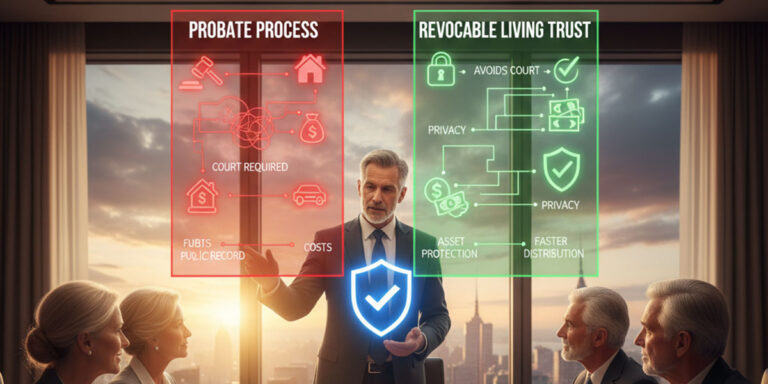
Revocable and irrevocable trusts are powerful estate planning tools that can help bypass the probate process altogether. Assets properly transferred into a trust during the grantor’s lifetime are generally not subject to probate. Upon the grantor’s death, the trustee can distribute the trust assets to the beneficiaries according to the terms of the trust document, without court intervention.
Establishing a trust can offer significant advantages, including privacy, flexibility, and the avoidance of probate delays and costs. For residents of Westchester County considering how to best manage their legacy, exploring the benefits of trusts is highly recommended. Our firm specializes in creating tailored trusts that align with your financial goals and family situation.
Even if a trust exists, some assets might still require probate if they were not properly funded into the trust. This is a common oversight that can be avoided with meticulous planning. Our estate planning services ensure that all assets are correctly aligned with your chosen estate planning strategy, whether it involves a will, a trust, or a combination of both.
The decision of whether to rely on a will or a trust, or a combination, depends on individual circumstances. Factors like the size of the estate, the nature of the assets, and the desire for privacy all play a role. Our experienced attorneys provide personalized advice to help you make the most informed choices for your estate.
When No Will Exists: Intestate Succession in Westchester
Dying without a valid will is known as dying “intestate.” When this occurs for a resident of Westchester County, New York State law dictates how the deceased’s assets will be distributed. This process is governed by the laws of intestacy and takes place under the supervision of the Surrogate’s Court.
Without a will, the court appoints an administrator to manage the estate. This individual is typically a close relative, such as a spouse or child. The administrator’s role is similar to that of an executor, but they must follow the specific rules of intestacy rather than the deceased’s personal wishes. This can be a source of distress for families who believe the deceased would have wanted their assets distributed differently.
New York’s intestacy laws establish a hierarchy of heirs. For example:
- If the deceased is survived by a spouse and no children, the spouse inherits the entire estate.
- If the deceased is survived by a spouse and one child, the spouse inherits the first $50,000 and half of the remaining estate, with the child receiving the other half.
- If the deceased is survived by a spouse and two or more children, the spouse inherits the first $50,000 and one-third of the remaining estate, with the children sharing the remaining two-thirds.
- If there is no surviving spouse, the estate passes to the children, then parents, then siblings, and so on, according to a defined order.
The process of intestate administration can be more complicated than probate with a will, as there may be disputes among potential heirs regarding who should administer the estate or how assets should be divided. It is crucial to have legal representation in these situations. A probate lawyer can help ensure the correct procedures are followed and that the estate is settled fairly according to New York law.
For those concerned about what might happen if they pass away without a will, our estate planning services are essential. We help clients create clear, legally sound wills that ensure their assets are distributed according to their wishes, avoiding the uncertainties of intestate succession. Planning ahead is the most effective way to protect your family and your legacy.
Elder Law Considerations and Protecting Seniors in Westchester
As individuals age, their legal and financial needs often become more complex. Elder law is a specialized area that addresses these concerns, focusing on issues such as long-term care planning, Medicare, Medicaid, and protecting seniors from exploitation. For residents of Westchester County, understanding these issues is paramount for ensuring quality of life and financial security in later years.
One critical aspect of elder law is planning for potential incapacitation. This involves establishing legal documents that designate trusted individuals to make decisions on your behalf if you become unable to do so yourself. A crucial document in this regard is a Power of Attorney. This legal instrument allows you to appoint an agent to manage your financial affairs, pay bills, and handle other financial matters if you become incapacitated.
Another vital document is a Health Care Proxy, which designates an agent to make medical decisions for you if you cannot communicate your own wishes. These documents are fundamental to proactive elder law planning, ensuring your preferences are honored and that your affairs are managed by someone you trust. Our NYC Elder Law attorneys are adept at crafting these essential documents.
Furthermore, elder law addresses the growing concern of elder abuse. This can take many forms, including financial exploitation, physical abuse, neglect, and emotional abuse. If you suspect a loved one is a victim of elder abuse in Westchester County, it is crucial to seek immediate legal intervention. Our firm is dedicated to protecting vulnerable seniors and taking swift action to stop abuse and hold perpetrators accountable.
Planning for long-term care, whether it involves in-home care, assisted living, or nursing home care, is another significant component of elder law. The costs associated with long-term care can be substantial, and many seniors rely on Medicaid to cover these expenses. Our elder law attorneys help families navigate the complex Medicaid application process, ensuring they qualify for benefits while preserving as many assets as possible. This often involves strategic planning years in advance.
The intersection of elder law and estate planning is significant. By incorporating an elder law strategy into your overall estate plan, you can ensure comprehensive protection for yourself and your loved ones throughout your lifetime and beyond. Our firm offers holistic legal solutions for seniors and their families in Westchester.
Guardianship Proceedings in Westchester County
When an individual in Westchester County is unable to manage their own personal or financial affairs due to minority, incapacity, or disability, a court may appoint a guardian. This process is known as a guardianship proceeding and is overseen by the Supreme Court or the Surrogate’s Court.
Guardianship is typically sought when there is no appropriate Power of Attorney or trust in place to manage the incapacitated person’s affairs. The court appoints a guardian to make decisions regarding the person’s healthcare, living arrangements, and financial management. This role requires a high degree of responsibility and fiduciary duty.
There are generally two main types of guardianships:
- Guardianship of the Person: The guardian is responsible for making decisions about the individual’s personal well-being, including medical care, housing, and daily needs.
- Guardianship of the Property (or Conservatorship): The guardian manages the individual’s finances, including paying bills, managing investments, and protecting assets.
A “plenary” guardian is appointed to handle both personal and property matters.
Initiating a guardianship proceeding requires filing a petition with the court, which includes evidence of the person’s incapacity. Notice must be given to the incapacitated person and their close relatives. The court will then appoint a guardian ad litem (an attorney) to represent the interests of the person for whom guardianship is sought. A thorough investigation into the individual’s circumstances and the proposed guardian’s suitability will be conducted.
Guardianship proceedings can be complex and emotionally charged. They are often initiated when family members disagree about the best course of action for an incapacitated loved one. Our guardianship lawyers in Westchester provide experienced representation to guide individuals through this process, whether they are seeking to appoint a guardian or are involved in a proceeding where their rights may be affected.
For those who wish to avoid the need for court-appointed guardianship, proactive estate planning, including the establishment of Powers of Attorney and healthcare directives, is essential. These documents allow individuals to designate who will make decisions for them, avoiding the need for a potentially costly and intrusive court process.
Morgan Legal Group: Your Trusted Partners in Westchester
The legal landscape surrounding estate administration, probate, and elder law in Westchester County is intricate and demanding. Navigating these processes requires not only legal expertise but also a deep understanding of the emotional complexities involved. At Morgan Legal Group, we combine decades of legal experience with a commitment to compassionate client service.
Our dedicated team of probate lawyers, estate planning attorneys, and elder law specialists are here to provide you with the guidance and support you need. We understand that each client’s situation is unique, and we tailor our strategies to meet your specific goals and circumstances.
Whether you are the executor of an estate, a beneficiary, a family member concerned about an elder’s well-being, or simply planning for the future, our firm offers comprehensive legal solutions. We pride ourselves on clarity, efficiency, and unwavering advocacy for our clients.
We help clients with:
- Probate and estate administration
- Will and trust drafting and litigation
- Guardianship proceedings
- Elder law planning, including Medicaid and long-term care
- Protection against elder abuse
- General estate planning to safeguard assets and wishes
Do not face the complexities of legal matters alone. Reach out to Morgan Legal Group today to schedule a consultation. Our commitment is to provide you with the highest level of legal counsel and peace of mind. You can contact us directly or schedule a consultation to discuss your needs. We are proud to serve the Westchester community and look forward to assisting you.
For further information on court procedures or legal resources in New York, you may find it helpful to visit the official website of the New York State Courts: nycourts.gov.
Let Morgan Legal Group be your trusted legal partner. We are committed to protecting your rights and ensuring your legacy is managed according to your wishes. Please visit our contact page to learn more about how we can assist you, or check out our Google My Business listing for additional information and reviews.