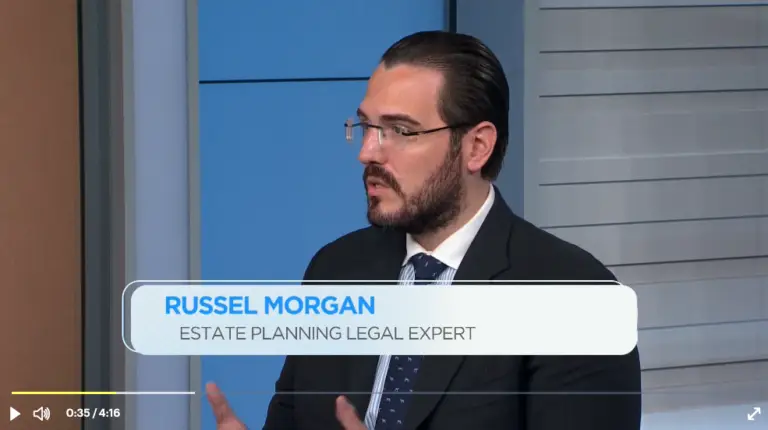
As seasoned New York attorneys with over three decades of dedicated practice, we at Morgan Legal Group understand that estate planning is not a luxury, but a fundamental necessity for every individual and family. Regardless of your age, net worth, occupation, or marital status, if you possess assets and have specific desires for their management during your lifetime and distribution after your passing, then a meticulously crafted estate plan is essential for you. It serves as a living document, functional both during your life and long after. Our firm specializes in mitigating financial and personal risks by establishing robust strategies for every conceivable contingency.
Through comprehensive estate planning, you can safeguard your legacy from potential losses, especially if you face incapacity. By proactively appointing fiduciaries, you ensure your affairs are managed precisely as you intend. Moreover, it guarantees that your hard-earned wealth benefits only those you cherish most. Beyond financial directives, your estate plan allows you to articulate your preferences for healthcare, even in dire circumstances, ensuring your voice is heard through legally binding documents. This foresight provides invaluable peace of mind, not just for you, but for your loved ones.
Do you have explicit wishes regarding your medical treatment in terminal conditions? Are you seeking the most straightforward methods to transfer assets to your beneficiaries, minimizing complications and optimizing tax liabilities? Look no further. Our experienced Estate Planning Attorney near Greenpoint Brooklyn stands ready to assist you. By contacting us today, you initiate a partnership with legal professionals proficient in constructing a holistic estate plan. Our tailored solutions address all your concerns, diligently working to achieve your unique estate goals with precision and empathy, reflecting our firm’s deep commitment to your family’s future.
The Cornerstone of Your Legacy: Why Estate Planning is Indispensable in 2026 NYC
In the dynamic landscape of New York City in 2026, the complexities of wealth preservation and transfer demand a proactive approach. Many perceive estate planning as a task reserved for the elderly or the exceptionally wealthy. This is a common misconception. In reality, estate planning is a vital tool for anyone who wishes to control their financial future, protect their loved ones, and ensure their wishes are honored, regardless of their current age or net worth. The absence of a plan can lead to significant legal, financial, and emotional burdens for your family during an already difficult time.
An effective estate plan goes far beyond simply drafting a Will. It encompasses a suite of legal instruments designed to address various life stages and potential challenges. From safeguarding minor children to planning for potential incapacity, from minimizing tax burdens to protecting assets from creditors, every facet of your life and legacy can be fortified through thoughtful preparation. Our firm, with its deep roots in NYC Elder Law and estate matters, provides comprehensive guidance to navigate these intricate processes, ensuring your plan is robust, legally sound, and reflective of your deepest values. We empower you to make informed decisions that will benefit generations.
For New Yorkers, the unique legal and financial environment presents specific considerations. High property values, complex business interests, and specific state tax laws necessitate expert advice. The cost of failing to plan far outweighs the investment in professional guidance. Without a proper estate plan, your assets could be subject to lengthy and costly probate processes, significant estate taxes, and distribution patterns dictated by state law, which may not align with your true intentions. We are here to help you avoid these pitfalls, crafting a custom strategy that serves your best interests and those of your beneficiaries.
Comprehensive Asset Transfer Strategies: Beyond the Basic Will
A fundamental aspect of estate planning involves the meticulous disbursement of your estate. Your carefully accumulated possessions should only pass to those you intend to benefit. While a Last Will and Testament is often the first document that comes to mind, and indeed, it is a critical component, it represents only one facet of a complete asset transfer strategy. A Will allows you to specify beneficiaries for assets held solely in your name, name a guardian for minor children, and appoint an executor to manage your estate’s administration after your passing. However, many assets can bypass the Will entirely, making a comprehensive approach crucial.
While basic Will templates are accessible online, relying on a DIY approach can introduce significant risks and unintended complications. The intricacies of New York estate law, coupled with the diverse nature of modern assets, require professional insight. Not all assets transfer according to a Will. Accounts with designated beneficiaries (like IRAs, 401(k)s, and life insurance policies) or assets held in joint tenancy with right of survivorship will pass directly to the named beneficiaries or surviving owner, irrespective of your Will. Our Wills and Trusts attorneys will guide you through these distinctions, ensuring your Will specifically addresses assets that are subject to probate and integrates seamlessly with your non-probate assets. This coordinated approach prevents confusion and potential disputes among your heirs.
Moreover, a Will can be challenged, leading to protracted and expensive litigation. A well-drafted Will, prepared with the assistance of an experienced estate planning attorney, minimizes these risks by adhering strictly to legal formalities and clearly articulating your intentions. We advise on proper execution, witness requirements, and potential challenges, fortifying your testamentary wishes against future claims. Our aim is to create a legally impregnable document that provides clarity and finality to your estate distribution, protecting your family from unnecessary stress and legal battles.
Minimizing and Avoiding Probate: A Key Objective for NY Estates
Another crucial objective in estate planning is to strategically address or, where possible, minimize and even avoid the probate process. Probate & Administration is the legal procedure through which a deceased person’s Will is validated by the Surrogate’s Court and their assets are officially distributed according to its terms, or according to New York’s intestacy laws if no valid Will exists. In Brooklyn and across New York, probate is frequently perceived as a lengthy, costly, and public process. It can expose your family’s financial details, invite potential disputes, and significantly delay asset distribution, often for months or even years.
You must carefully evaluate how probate might impact your estate and family dynamics. Consider factors such as the size and complexity of your estate, whether you own property in multiple states (requiring ancillary probate), the nature of your assets (e.g., business interests, intellectual property), and the existing relationships among your family members. If your circumstances lean towards complexity, such as owning significant assets, diverse investments, or if family estrangement is a concern, then actively planning to minimize or avoid probate becomes even more critical. These situations exacerbate the challenges inherent in the probate system, making a proactive strategy indispensable for a smooth transition of wealth.
Our firm excels in developing sophisticated strategies to circumvent probate. One of the most effective tools is the establishment of a trust. Assets legally transferred into a revocable or irrevocable trust before your passing are no longer considered part of your probate estate. Upon your death, the named trustee can distribute these assets directly to your beneficiaries according to the trust’s terms, without court intervention. This process is typically faster, more private, and less expensive than probate. We guide you through the various types of trusts, such as Living Trusts, Special Needs Trusts, and Charitable Trusts, to identify the most suitable structure for your specific goals, ensuring your legacy is protected and distributed efficiently.
Types of Trusts and Their Strategic Applications in NY Estate Planning
Understanding the diverse landscape of trusts is paramount for effective estate planning. Trusts offer unparalleled flexibility and control over your assets, addressing everything from probate avoidance to asset protection and tax minimization. A Revocable Living Trust is a common choice, allowing you to transfer assets into the trust while retaining full control during your lifetime. You can amend or revoke it at any time. Upon your death, assets held in the trust pass directly to your beneficiaries without probate. This trust also provides for continuity of management in case of your incapacity, as a successor trustee can immediately step in to manage assets without court involvement.
Conversely, Irrevocable Trusts offer robust asset protection and significant tax advantages, but at the cost of relinquishing control. Once assets are transferred into an irrevocable trust, they are generally beyond your reach and often removed from your taxable estate. This makes them powerful tools for Medicaid planning, shielding assets from long-term care costs, and reducing estate tax liability. Examples include Irrevocable Life Insurance Trusts (ILITs) which remove life insurance proceeds from your taxable estate, and Qualified Personal Residence Trusts (QPRTs) which allow you to gift your home while continuing to live in it for a period, reducing its value for estate tax purposes. Our firm meticulously assesses your financial situation and goals to recommend the optimal trust structure for you.
Beyond these foundational types, New York law supports various specialized trusts designed for specific purposes. A Special Needs Trust, for instance, allows you to provide for a loved one with disabilities without jeopardizing their eligibility for essential government benefits such as Medicaid and SSI. A Charitable Remainder Trust or Charitable Lead Trust enables you to integrate philanthropic goals into your plan while potentially generating income for yourself or your heirs and securing charitable income or estate tax deductions. Furthermore, sophisticated trusts like Spousal Lifetime Access Trusts (SLATs) or Grantor Retained Annuity Trusts (GRATs) can be utilized by high-net-worth individuals for advanced wealth transfer strategies, leveraging their unique tax benefits. Our deep expertise in Wills and Trusts allows us to craft bespoke solutions for even the most complex family and financial situations.
Planning for Incapacity: Ensuring Your Voice is Heard
A critical, yet often overlooked, dimension of comprehensive estate planning is preparing for potential incapacity. In legal terms, incapacity arises when an individual is deemed unable to make reasonable decisions regarding their personal care, medical treatment, or financial affairs due to mental or physical impairment. This can result from conditions like advanced dementia, Alzheimer’s disease, severe stroke, or a catastrophic accident. While it is a challenging prospect to contemplate, proactively planning for such a possibility safeguards your autonomy and protects your assets from mismanagement. Without proper documents in place, a court may appoint a guardian, a public and potentially contentious process that might not align with your wishes, highlighting the importance of documents like a Power of Attorney.
Our firm assists clients in establishing a suite of indispensable legal documents designed to empower trusted individuals to act on your behalf during incapacity. A Durable Power of Attorney designates an agent to manage your financial affairs, covering everything from banking and investments to real estate transactions and bill payments. Unlike a general power of attorney, a durable power remains effective even if you become incapacitated. A Healthcare Proxy appoints an agent to make medical decisions for you if you cannot. This document ensures that your healthcare choices, consistent with your values and beliefs, are respected and implemented, avoiding difficult decisions for family members during a crisis.
Furthermore, an Advance Healthcare Directive, often referred to as a Living Will, allows you to clearly state your preferences regarding life-sustaining treatment in terminal or irreversible conditions. This includes decisions about artificial nutrition and hydration, mechanical ventilation, and other medical interventions. These documents are your voice when you cannot speak for yourself. We also discuss the importance of a DNR (Do Not Resuscitate) order in certain circumstances. By establishing these critical instruments, you retain control over your future, mitigate potential family conflicts, and ensure your wishes are honored, providing profound peace of mind. For situations where a loved one is already incapacitated without these documents, our firm also offers experienced legal counsel in Guardianship proceedings.
Navigating New York and Federal Estate Taxes in 2026
For New York residents, strategic tax planning is an indispensable component of estate planning. Both state and federal estate taxes can significantly diminish the value of the inheritance you leave to your loved ones if not properly addressed. As of 2026, it is critical to understand the nuances of these taxes. The New York State Estate Tax exemption is indexed for inflation and is approximately $7 million per individual. However, New York is notorious for its “cliff tax.” If your taxable estate exceeds the exemption amount by more than 5%, the *entire* estate, from the first dollar, becomes subject to the state estate tax, with rates potentially reaching 16%. This unique feature makes proactive planning crucial to avoid unexpectedly large tax liabilities for your heirs.
On the federal side, 2026 marks a significant potential shift. Under current law, the federal estate tax exemption, which is $13.61 million per individual in 2024, is scheduled to revert to approximately $7 million to $7.5 million per individual (adjusted for inflation from 2017 levels) unless Congress acts to extend the higher exemption. This potential decrease in the federal exemption means that many more New York estates will become subject to federal estate tax, which carries a top rate of 40%. Understanding the interplay between these two tax systems, and the potential sunsetting of federal provisions, is paramount for effective wealth preservation. Our attorneys continuously monitor legislative changes and adapt strategies to ensure your plan remains optimized.
Our experienced estate planning attorney can implement sophisticated strategies to minimize both New York and federal estate taxes. These may include strategic periodical gifting, which utilizes the annual federal gift tax exclusion (projected to be around $18,000 to $19,000 per donee in 2026) to reduce your taxable estate over time. Another powerful technique involves placing valuable assets into irrevocable trusts, thereby removing them from your taxable estate. Additionally, strategies like marital deductions, charitable deductions, and generation-skipping transfer tax planning are employed for larger estates. We conduct thorough analyses of your assets and liabilities to design a tax-efficient plan that maximizes the inheritance for your beneficiaries, ensuring your legacy is preserved for generations.
The Role of an Executor and Trustee: Fiduciary Responsibilities in NY
Central to any well-structured estate plan is the careful selection of your fiduciaries: the executor of your Will and the trustee of your trusts. These individuals or institutions bear significant legal and ethical responsibilities in managing and distributing your assets according to your instructions. An Executor (or Personal Representative) is appointed in your Will and confirmed by the Surrogate’s Court during probate. Their duties typically include locating and inventorying assets, paying debts and taxes, filing necessary court documents, and ultimately distributing the remaining estate to your beneficiaries. This role requires diligence, integrity, and a strong understanding of New York probate law. Mismanagement or errors can lead to delays, legal challenges, and financial penalties.
A Trustee, on the other hand, is responsible for managing assets held within a trust, whether during your lifetime (for a revocable trust) or after your death (for both revocable and irrevocable trusts). The trustee’s duties are governed by the specific terms of the trust document and New York’s Estates, Powers and Trusts Law (EPTL). These duties include prudent investment of trust assets, accurate record-keeping, timely distributions to beneficiaries, and compliance with all tax requirements. The role of a trustee is ongoing, often spanning many years, particularly for trusts established for minors or for long-term asset management. Both executors and trustees are fiduciaries, meaning they must act in the best interests of the beneficiaries, not their own.
Choosing the right individuals for these critical roles is paramount. Considerations should include their trustworthiness, financial acumen, organizational skills, and willingness to undertake significant responsibilities. Many clients choose a trusted family member or friend, but for complex estates or potentially contentious family situations, appointing a professional fiduciary (such as a bank trust department or a professional trust company) can be a wise decision. Our firm provides invaluable guidance in selecting suitable fiduciaries, explaining their duties, and outlining potential liabilities. We also offer legal support to executors and trustees throughout the Probate & Administration process and trust administration, ensuring they fulfill their duties effectively and legally, minimizing stress for all parties involved.
Guardianship Planning: Protecting Your Minor Children and Incapacitated Loved Ones
For parents of minor children, estate planning takes on an additional, deeply personal dimension: establishing Guardianship. While contemplating a scenario where you are no longer there to care for your children is distressing, designating a legal guardian in your Will is one of the most loving and responsible decisions you can make. Without this designation, if both parents pass away or become incapacitated, the Surrogate’s Court will appoint a guardian. This process can be prolonged, costly, and emotionally taxing for your children. Crucially, the court’s choice might not align with your preferences or your children’s best interests. Your Will allows you to name not only a guardian for their person (who will raise them) but also a guardian for their property (who will manage their inheritance until they reach adulthood).
Beyond minor children, guardianship planning also extends to adults who may become incapacitated without prior directives. If an adult loses the capacity to make personal or financial decisions and has not executed a Durable Power of Attorney or Healthcare Proxy, a court-appointed guardian may be necessary. This process, governed by Article 81 of the New York Mental Hygiene Law, is often initiated by concerned family members or social services. It involves petitioning the Supreme Court to declare an individual incapacitated and to appoint a guardian to manage their personal needs, property, or both. The court’s primary objective is to protect the incapacitated person, and the guardian’s powers are tailored to their specific needs, ranging from making medical decisions to managing finances.
Our firm provides comprehensive guidance on all aspects of guardianship planning. For minor children, we help you carefully select and properly designate guardians in your Will, ensuring a seamless transition of care and protection of their inheritance, often through trusts for minors. For adult guardianship situations, we represent petitioners seeking guardianship for a loved one, navigating the complex court process with sensitivity and expertise. We also provide counsel to individuals seeking to avoid adult guardianship through proactive Power of Attorney and advance directive planning. Our goal is to ensure that your family is spared the uncertainty and stress of court intervention, and that your loved ones receive the care and support they need, consistent with your wishes.
Asset Protection Strategies: Shielding Your Wealth in New York
In a litigious society like New York, effective asset protection is a critical component of a robust estate plan. Beyond simply transferring assets, protecting them from potential creditors, lawsuits, divorce, and long-term care costs ensures your legacy remains intact for your intended beneficiaries. While there is no absolute shield, strategic planning can significantly reduce your exposure to various risks. One common concern for many New Yorkers is the escalating cost of long-term care, which can quickly deplete a lifetime of savings. Medicaid planning, a specialized area of elder law, involves structuring assets to qualify for Medicaid benefits, which cover nursing home care, while preserving a substantial portion of your wealth for your family.
Various legal tools can be employed for asset protection. Irrevocable Trusts, as discussed, are foundational. By transferring assets into an irrevocable trust, they are generally removed from your personal ownership and thus protected from future creditors or lawsuits. However, these transfers must occur within certain look-back periods (e.g., five years for Medicaid in New York) to be effective. Homestead exemptions and certain retirement accounts (like IRAs and 401(k)s) also offer some level of creditor protection under New York law. For business owners, choosing the appropriate business entity (e.g., LLC or corporation) can provide a layer of protection by separating personal and business liabilities. Our firm’s expertise in NYC Elder Law extends to crafting bespoke Medicaid planning and asset protection strategies.
Furthermore, marital property laws in New York can impact asset distribution during divorce or separation. Pre-nuptial and post-nuptial agreements, while often considered part of Family Law, play a vital role in estate and asset protection planning, clarifying ownership and distribution of assets in the event of marital dissolution. We also advise on strategies to protect inheritances for beneficiaries who may be at risk of divorce or financial mismanagement, such as through the use of spendthrift trusts. Our holistic approach considers all potential threats to your wealth, allowing us to implement proactive measures that safeguard your assets and ensure they ultimately benefit your loved ones, exactly as you intended. This proactive stance is essential for securing your financial future against unforeseen challenges.
Integrating Charitable Giving into Your Estate Plan
For many clients, their estate plan is not solely about providing for family but also about leaving a philanthropic legacy. Integrating charitable giving can be a powerful way to support causes you believe in while potentially realizing significant tax advantages. There are various sophisticated methods to incorporate philanthropy into your estate plan, each offering unique benefits. A direct bequest in your Will is the simplest approach, designating a specific dollar amount or percentage of your estate to a qualified charity. This reduces your taxable estate and ensures your chosen organizations receive support after your passing.
For those seeking more advanced strategies, charitable trusts offer greater flexibility and potential tax efficiencies. A Charitable Remainder Trust (CRT) allows you to transfer assets into an irrevocable trust, receive an income stream for a specified term or your lifetime, and then have the remainder distributed to a charity. This provides an immediate income tax deduction, avoids capital gains tax on appreciated assets transferred to the trust, and removes the assets from your taxable estate. Conversely, a Charitable Lead Trust (CLT) makes payments to a charity for a set period, with the remainder returning to you or your non-charitable beneficiaries. CLTs are often used to reduce gift or estate taxes on assets passed to heirs.
Another popular option is establishing a Donor-Advised Fund (DAF). A DAF allows you to make an irrevocable contribution to a public charity that sponsors the fund, receiving an immediate tax deduction. You then recommend grants from the fund to your favorite charities over time. This offers flexibility, privacy, and simplifies record-keeping. For those with substantial wealth, creating a private foundation can provide greater control and a lasting family legacy of philanthropy. Our attorneys assist in evaluating your charitable goals, analyzing potential tax benefits, and structuring the most effective giving strategy to align with your overall estate planning objectives, ensuring your generosity makes a lasting impact while optimizing your financial outcomes. We ensure your giving reflects your values and maximizes its positive effect.
The Importance of Digital Asset Planning in Modern Estates
In our increasingly digital world, a comprehensive estate plan must now extend beyond tangible assets to include your digital footprint. From online banking and investment accounts to social media profiles, email accounts, photographs stored in the cloud, and cryptocurrency holdings, your digital assets have significant financial and sentimental value. Without proper planning, accessing and managing these assets after your passing or during incapacity can be incredibly challenging, if not impossible, for your loved ones. This can lead to lost financial value, identity theft risks, and the inability to preserve precious memories. New York’s Revised Uniform Fiduciary Access to Digital Assets Act (RUFADAA) provides some guidance, but proactive planning remains essential.
Our firm emphasizes the creation of a detailed inventory of your digital assets, including usernames, passwords, and instructions for access and management. This information should be stored securely and provided to your fiduciaries through a Letter of Instruction, which is typically a non-binding document that accompanies your legal estate plan. While passwords should never be included in your Will due to its public nature, a secure, encrypted digital vault or a physical secure location with clear instructions for your executor or trustee is vital. Your fiduciaries need to know what accounts exist, how to access them, and what your wishes are for their disposition.
Key considerations for digital asset planning include deciding whether to preserve or delete social media accounts, managing online businesses or intellectual property, accessing cloud storage containing photos and documents, and handling cryptocurrency wallets. For financial digital assets, providing explicit authorization to your executor or trustee through your Will or trust document is crucial to ensure they have the legal authority to access, manage, and transfer these assets. Without this, service providers may deny access, citing privacy policies. We guide you through the process of inventorying, securing, and providing clear instructions for your digital estate, ensuring that your entire legacy, both physical and virtual, is managed according to your wishes and protected for future generations. This foresight prevents considerable stress and potential loss for your heirs.
Business Succession Planning: Ensuring Continuity and Value
For entrepreneurs, small business owners, and partners in professional practices, estate planning must include robust business succession planning. The sudden death or incapacitation of a key owner can throw a business into chaos, jeopardizing its continuity, profitability, and value. Without a clear plan, the business may be forced into liquidation, or ownership may pass to individuals ill-equipped to manage it, leading to significant financial losses for your family and employees. A well-devised succession plan ensures a smooth transition of leadership and ownership, preserving the value of your business interest for your heirs and protecting the livelihoods of those who depend on it.
Our firm works closely with business owners to develop comprehensive succession strategies tailored to their specific industry, business structure, and personal goals. Key elements of business succession planning include identifying and preparing a successor, whether it’s a family member, a key employee, or a third party. This often involves mentorship, training, and formal agreements. Crucially, a buy-sell agreement is a foundational document. This legally binding contract dictates what happens to an owner’s share of the business upon their death, disability, or retirement. It can specify the purchase price, funding mechanisms (often life insurance), and eligible buyers, ensuring a fair and orderly transfer of ownership while providing liquidity to your estate.
Other vital considerations include valuing the business, establishing funding mechanisms for buyouts (e.g., life insurance policies), and addressing potential tax implications of the transfer. For family businesses, we help navigate the complex dynamics of passing ownership and management to the next generation, often utilizing trusts to manage the business interest for younger heirs. A well-executed business succession plan is not merely about transferring ownership; it’s about safeguarding the legacy you’ve built, protecting your family’s financial future, and ensuring the continued success of your enterprise. Our expertise ensures that your business legacy is seamlessly integrated into your overall estate planning, providing clarity and security for years to come.
Regular Review and Updating of Your Estate Plan: Staying Current in 2026
An estate plan is not a static document; it is a living framework that requires periodic review and adjustment to remain effective and reflective of your current life circumstances, financial situation, and legal landscape. Life is dynamic, and significant events can quickly render an outdated plan obsolete, potentially leading to unintended consequences or missed opportunities for tax savings. The recommendation for review is generally every three to five years, or immediately following any major life event or legal change. This proactive approach ensures your plan continues to serve your best interests and those of your beneficiaries effectively.
Major life events that necessitate a review include marriage or divorce, the birth or adoption of children, the death of a beneficiary or fiduciary, a significant change in financial status (inheritance, sale of a business, retirement), or relocating to another state. For instance, a divorce often requires updating beneficiary designations on all accounts, as well as amending your Will and trusts to reflect new intentions. The birth of a child may necessitate establishing or revising trusts for minors and appointing guardians. Even changes in your relationships with designated fiduciaries can warrant a reevaluation of their roles. Furthermore, the changing tax landscape, such as the potential federal estate tax exemption sunset in 2026, makes regular review crucial to capitalize on current laws and avoid unexpected tax burdens.
Our firm strongly advocates for ongoing engagement with our clients to ensure their estate plans remain robust and aligned with their evolving needs. During a review, we assess not only the legal documents themselves but also your asset titling, beneficiary designations on non-probate assets, and overall financial picture. We discuss any changes in your family structure, personal wishes, or charitable intentions. This meticulous approach guarantees that your estate plan is always current, optimized for tax efficiency, and accurately reflects your desires. Ignoring the need for updates can lead to costly probate delays, unnecessary taxation, or, most importantly, your assets being distributed contrary to your final wishes. Partner with us to ensure your legacy planning evolves with you, providing continuous peace of mind and protection.
The Morgan Legal Group Advantage: Your Trusted Estate Planning Partner
Choosing the right legal partner for your estate planning needs is a decision of profound importance. At Morgan Legal Group, we bring over 30 years of specialized experience in New York Estate Planning, Probate, Guardianship, and Elder Law. Our deep understanding of New York State laws, coupled with a commitment to personalized service, sets us apart. We don’t offer one-size-fits-all solutions; instead, we invest the time to truly understand your unique circumstances, aspirations, and concerns. Our approach is collaborative, educational, and empathetic, ensuring you feel confident and informed at every stage of the planning process.
Our expertise spans the full spectrum of estate planning tools, from foundational Wills and comprehensive Wills and Trusts to advanced tax-saving strategies, asset protection, and NYC Elder Law considerations. Whether you are navigating the complexities of multi-generational wealth transfer, protecting a family business, planning for long-term care, or ensuring your minor children are cared for, our team has the knowledge and experience to craft a resilient and effective plan. We are proficient in establishing durable Power of Attorney and healthcare directives, guiding you through Guardianship matters, and providing compassionate support in cases of Elder Abuse.
We believe in building lasting relationships with our clients, serving as their trusted legal advisors through all of life’s transitions. Our commitment extends beyond drafting documents; we provide ongoing counsel, assist with regular plan reviews, and stand ready to support your family through the Probate & Administration process when the time comes. We pride ourselves on demystifying complex legal concepts, making your estate plan accessible and understandable. When you partner with Morgan Legal Group, you gain more than legal representation; you gain a dedicated advocate committed to securing your legacy and providing peace of mind for you and your loved ones. Don’t leave your family’s future to chance. Take the proactive step today to secure your legacy.
Get Started: Your Estate Planning Journey Begins Here
The future is inherently uncertain, making proactive planning not just prudent, but essential. Delaying your estate planning can leave your loved ones vulnerable to lengthy court processes, significant tax burdens, and potential family disputes, burdens that could be easily alleviated with proper preparation. The peace of mind that comes from knowing you have meticulously accounted for all possible future contingencies – from incapacity to the ultimate distribution of your legacy – is invaluable. It ensures your wishes are honored, your assets are protected, and your family is cared for exactly as you intend.
Our firm, Morgan Legal Group, is conveniently located and deeply connected to the Greenpoint Brooklyn community, serving clients across New York City with unparalleled expertise and dedication. We invite you to take the crucial first step toward securing your family’s future and preserving your legacy. Contact us today for a consultation with a seasoned estate planning attorney near you. During this initial meeting, we will listen attentively to your concerns, answer your questions, and provide a clear roadmap for developing a comprehensive and personalized estate plan. Let us help you transform uncertainty into clarity, ensuring your enduring peace of mind.