Experiencing the loss of a loved one brings immense emotional challenges. During such a sensitive time, the thought of managing complex legal processes like probate can feel overwhelming. For families in Westchester County, understanding and navigating the New York probate system is a crucial step in settling an estate.
Probate is the court-supervised legal process that validates a deceased person’s will, identifies and values their assets, settles debts and taxes, and ultimately distributes the remaining property to the rightful beneficiaries. Whether a will exists or not, this process ensures the estate is administered legally and transparently.
At Morgan Legal Group, our dedicated team of experienced attorneys offers compassionate and authoritative guidance through every phase of probate in Westchester County. We aim to demystify the legal landscape, protect your family’s inheritance, and ensure your loved one’s final wishes are honored with precision and care.
Understanding Probate in Westchester County, NY
In New York State, the Surrogate’s Court oversees all probate proceedings. For residents of Westchester County, this means the process unfolds within the Westchester County Surrogate’s Court. This court’s fundamental role is to confirm the proper and legal administration of the deceased individual’s estate.
The probate journey typically begins with filing the will (if one exists) and a petition with the Surrogate’s Court. If the court validates the will, it officially appoints the named executor. Should a person pass away without a will (known as dying ‘intestate’), the court designates an administrator, usually a close family member, to manage the estate according to New York’s specific intestacy laws.
Key actions during this phase involve meticulously identifying and valuing all assets, from real estate and bank accounts to personal possessions. Simultaneously, the estate must account for all outstanding debts, including mortgages, credit card balances, medical bills, and funeral expenses. Only after settling these obligations, along with any applicable taxes, can the remaining assets be distributed to beneficiaries as the will directs or state law mandates.
When is Formal Probate Necessary?
Probate generally becomes a requirement for estates containing assets titled solely in the deceased person’s name. This often includes real property, vehicles, and financial accounts that lack a designated beneficiary or joint ownership with survivorship rights. Even seemingly modest estates can necessitate probate if assets are not structured to bypass the process.
However, various assets can bypass formal probate entirely, streamlining the transfer of wealth. These ‘non-probate’ assets include:
- Assets held within a properly funded trust.
- Life insurance policies with a named beneficiary.
- Retirement accounts (like 401(k)s or IRAs) with a named beneficiary.
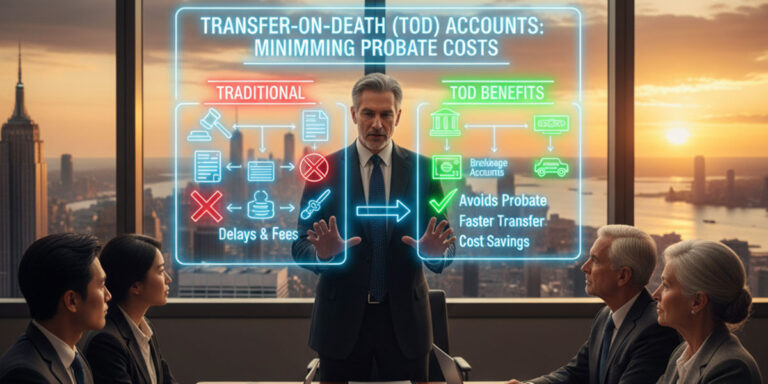
- Bank accounts or investment accounts with Payable-on-Death (POD) or Transfer-on-Death (TOD) designations.
- Assets owned jointly with rights of survivorship, which typically pass directly to the surviving owner.
For estates falling below a specific value threshold, New York law may permit a simplified procedure known as a small estate affidavit, or voluntary administration. Consulting a Westchester Probate Lawyer helps determine the most efficient path forward for your loved one’s estate.
The Executor’s Responsibilities and Intestacy
The executor, appointed by a valid will, bears significant legal duties. In Westchester County, this individual must navigate the Surrogate’s Court, manage all estate assets, satisfy debts and taxes, and ultimately distribute the inheritance. Their responsibilities include filing the will, obtaining Letters Testamentary (official court authorization), inventorying and appraising assets, managing investments, and paying legitimate estate expenses and taxes.
Executors also maintain open communication with beneficiaries and provide a detailed accounting of all transactions. They hold a fiduciary duty to act in the estate’s and beneficiaries’ best interests; failure to do so can result in personal liability. Many executors wisely seek legal counsel to ensure precise fulfillment of these complex duties.
What Happens Without a Will (Intestacy)?
If someone dies without a valid will, they die ‘intestate.’ New York State law then dictates the distribution of assets. The probate process still occurs, but the court appoints an administrator, typically a close relative, instead of an executor. New York’s intestacy laws specify a strict order of inheritance. For instance, a spouse inherits the entire estate if there are no children. If both a spouse and children survive, the spouse receives the first $50,000 plus half of the remaining estate, with children sharing the other half. Without a spouse or children, assets pass to parents, siblings, and then more distant relatives according to a statutory hierarchy. An administrator’s duties mirror an executor’s, making a Westchester Probate Lawyer invaluable in these often challenging situations.
Navigating Potential Challenges in Probate
While the probate process aims for order, various challenges can emerge, potentially causing delays and increased stress for families. Recognizing these issues early allows for proactive strategies.
-
Will Contests: A will’s validity can be challenged on grounds such as undue influence, fraud, lack of mental capacity, or improper execution. Such contests often lead to litigation, significantly prolonging the probate timeline.
-
Beneficiary Disputes: Disagreements among beneficiaries regarding asset valuation, distribution choices, or the executor’s actions are common. These conflicts can strain family relationships and may require court intervention.
-
Complex Assets: Estates containing intricate assets like businesses, closely held stock, or unique collections demand specialized appraisers and meticulous legal handling for proper valuation and distribution.
-
Undisclosed Debts or Creditors: The discovery of unexpected debts can complicate the estate’s financial settlement. Proper notification procedures are critical to address all legitimate claims.
-
Executor Mismanagement: An inexperienced or overwhelmed executor, or one who acts improperly, can create substantial legal difficulties for the estate and themselves. This highlights the critical need for expert legal guidance.
Addressing these complexities effectively requires the expertise of a seasoned Westchester Probate Lawyer. Morgan Legal Group has extensive experience resolving these types of intricate probate matters, protecting our clients’ interests throughout the process.
The Indispensable Role of a Westchester Probate Lawyer
Facing probate in Westchester County can be a daunting task, especially while grieving. Engaging a skilled Westchester Probate Lawyer provides invaluable benefits, ensuring peace of mind and efficient resolution. An experienced attorney confirms that all legal requirements are met precisely, safeguarding the estate and its beneficiaries.
Our team at Morgan Legal Group provides comprehensive legal support throughout the entire probate journey. We assist with every stage, from initial petition filing and thorough asset inventory to debt resolution and final distribution. We manage complex legal documentation, represent your interests in Surrogate’s Court, and ensure full compliance with all state and local regulations.
Furthermore, a probate attorney identifies potential challenges early, developing strategies to mitigate or resolve them. This includes mediating beneficiary disputes, managing will contests, or navigating intricate tax issues. We strive to make the probate process as smooth and stress-free as possible, allowing you to focus on your family and healing during a difficult period.
Proactive Estate Planning: Minimizing Probate’s Impact
While this guide focuses on probate, it is crucial to recognize that effective estate planning often minimizes or even entirely avoids the need for this sometimes lengthy and costly court process. A well-structured estate plan is a proactive approach to managing and distributing your assets during your lifetime and after your death.
Estate planning encompasses drafting a will, but also includes other essential documents like powers of attorney, healthcare directives, and establishing various types of trusts. Trusts are particularly powerful tools for asset management and distribution outside of probate. Assets properly transferred into a trust can bypass Surrogate’s Court, facilitating a more private, efficient, and often less expensive transfer to beneficiaries. While wills are vital for directing asset distribution, they remain subject to probate.
A comprehensive plan also addresses incapacity planning through a power of attorney, designates healthcare preferences, and can integrate elder law considerations, guardianship planning, and asset protection strategies. Morgan Legal Group advocates for proactive estate planning as the most effective way to protect your legacy and ease the burden on your loved ones. We offer tailored estate planning services for Westchester County residents to secure their future.
Estate Taxes in New York and Federally
Understanding estate taxes is a vital component of both estate planning and the probate process. New York State imposes its own estate tax, separate from the federal estate tax. Exemption amounts for both are subject to change, making current legal knowledge essential. The New York State estate tax applies to estates valued above a certain threshold, taxing the taxable estate after allowable deductions. The federal estate tax has a significantly higher exemption, primarily impacting larger estates. Calculating these taxes requires accurate asset valuation, understanding deductions and credits, and timely filing. An experienced Westchester Probate Lawyer or estate tax attorney guides clients through these intricacies, ensuring compliance and potentially minimizing tax liability. For up-to-date information on New York State estate tax, refer to the NYS Department of Taxation and Finance.
Beyond Probate: Related Legal Areas
The Surrogate’s Court in Westchester County handles more than just deceased estates. It also presides over matters of guardianship and offers avenues for protecting vulnerable seniors.
Guardianship and Surrogate’s Court
Guardianship proceedings initiate when an individual is deemed incapacitated and unable to manage their personal or financial affairs. The court appoints a guardian to make decisions on behalf of the incapacitated person. Guardianships can be of the person (healthcare, living arrangements) or of the property (managing assets, paying bills). Initiating guardianship requires filing a petition and often medical documentation. A guardianship lawyer is crucial for navigating these complex proceedings, preparing petitions, gathering evidence, and representing all parties’ interests. Proactive estate planning, particularly with a power of attorney, can often prevent the need for formal guardianship.
Protecting Seniors from Elder Abuse
Protecting seniors from abuse and exploitation is a critical concern, and elder abuse is a multifaceted issue frequently encountered in elder law and probate. Abuse can manifest as physical, emotional, financial exploitation, or neglect. Financial exploitation, often perpetrated by caregivers or family members, is particularly common. Signs include unexplained withdrawals, sudden changes in financial documents, or isolation. Legal intervention may involve freezing assets, prosecuting perpetrators, and establishing protective measures like stronger powers of attorney or guardianship. Morgan Legal Group is dedicated to protecting seniors and assists victims and their families in pursuing legal remedies. Proactive estate planning and careful selection of agents can significantly reduce the risk of elder abuse.
Duration, Cost, and Family Dynamics in Probate
The duration and cost of the probate process in Westchester County vary significantly based on an estate’s complexity. A straightforward estate with a clear will and no disputes might conclude within six to twelve months. However, estates with substantial assets, real estate in multiple locations, business interests, or contested issues can extend for two years or more.
Probate costs typically include court filing fees, appraisal costs, attorney fees, and potential expenses for accounting or tax preparation. Attorney fees can be structured hourly or, in some cases, as a statutory commission based on the estate’s value, though hourly representation is common for probate matters. Morgan Legal Group commits to fee transparency, discussing our structure upfront and providing clear estimates. We leverage our expertise to minimize delays and resolve issues promptly, thereby controlling overall estate administration costs.
Family dynamics profoundly influence both probate and estate planning. Issues like divorce, remarriage, or blended families can complicate estate administration. New York law generally revokes will provisions for divorcing spouses unless explicitly stated otherwise. Blended families require careful planning, often utilizing specific types of trusts, to ensure assets are distributed according to wishes and to prevent disputes between current spouses and children from prior marriages. Disputes among siblings or other relatives over will interpretation or asset valuation are common during probate, sometimes escalating to litigation. Our firm handles these complex family dynamics with sensitivity and legal expertise.
Choose Morgan Legal Group for Your Westchester Probate Needs
When you face the challenging process of probate in Westchester County, selecting the right legal counsel is paramount. Morgan Legal Group offers a unique blend of profound legal expertise, extensive experience, and a compassionate approach tailored to families navigating estate matters.
Our firm, led by seasoned attorneys like Russell Morgan, Esq., possesses over 30 years of dedicated experience in estate planning, probate, guardianship, and elder law. We deeply understand the intricate laws and procedures of New York’s Surrogate’s Court, adeptly handling a wide spectrum of probate cases, from the simple to the highly complex.
We pride ourselves on providing personalized attention. Each estate is unique, and every family’s situation demands a tailored strategy. Our attorneys listen attentively to your concerns, explain your options clearly, and guide you through every step of the probate process with empathy and professionalism. Our goal is to alleviate your stress and ensure your loved one’s wishes are honored accurately and efficiently.
By choosing Morgan Legal Group, you partner with a team committed to protecting your inheritance, resolving disputes effectively, and ensuring the smooth administration of the estate. We help you navigate the legal complexities so you can focus on what matters most—your family and your healing.
We invite you to contact us today to discuss your probate needs in Westchester County. We are here to provide the expert guidance and support you deserve during this challenging time.
For those seeking to plan ahead and avoid probate complexities, we also offer comprehensive estate planning services. Let us help you secure your legacy and protect your loved ones. Schedule a consultation with our experienced Westchester attorneys.