Understanding the Probate Process in New York for Westchester Estates
Losing a loved one is an incredibly difficult time. The last thing you want to deal with is a complex legal process. In New York, that process is often called probate. It’s the court-supervised procedure that validates a deceased person’s last will and testament. It also appoints an executor to administer their estate. For families in Westchester County, understanding the nuances of the New York probate process is crucial. Our firm, Morgan Legal Group, is here to guide you through every step.
This guide provides an exhaustive overview of probate in New York, with a specific focus on Westchester. We will cover what probate is, why it’s necessary, and the typical steps involved. We’ll also discuss situations where probate might be avoided. Moreover, we’ll highlight the benefits of having experienced legal counsel by your side during this challenging period.
The state of New York has specific rules and regulations governing how estates are settled after someone passes away. These laws aim to ensure that assets are distributed according to the deceased’s wishes, or by state law if no will exists. The Surrogate’s Court in each county oversees this process. For those residing in or with property in Westchester, the Westchester County Surrogate’s Court will handle the proceedings.
We understand that legal jargon can be intimidating. Our goal is to demystify the probate process. We want to empower you with the knowledge needed to make informed decisions. This is especially important when dealing with the distribution of assets and settling debts. The journey through probate can be lengthy and demanding. It requires careful attention to detail and strict adherence to court deadlines.
What is Probate and Why is it Necessary in NY?
Probate is the legal process that validates a deceased person’s will. It also oversees the distribution of their assets to beneficiaries. In New York, this process is handled by the Surrogate’s Court. The court ensures that the deceased’s wishes, as expressed in their will, are carried out. Furthermore, it provides a formal mechanism for creditors to make claims against the estate.
If the deceased died without a valid will, a process called “administration” takes place. This is similar to probate but is governed by New York’s laws of intestacy. The court appoints an administrator to distribute assets. This is often a close relative. The probate process protects both the beneficiaries and potential creditors. It ensures fairness and transparency.
The necessity of probate stems from several key functions. Firstly, it officially validates the will. This prevents fraudulent claims. Secondly, it provides legal authority for the executor (or administrator) to act on behalf of the estate. This includes selling property, paying debts, and distributing assets. Thirdly, it offers a defined period for creditors to present their claims.
For a Westchester estate, the Surrogate’s Court located in Valhalla will be the primary venue. This court has jurisdiction over matters related to wills, estates, and guardianships within the county. Navigating this court requires familiarity with its procedures and forms. This is where the expertise of a seasoned attorney becomes invaluable. They can ensure all filings are accurate and timely.
Without probate, transferring assets like real estate or significant bank accounts can be impossible. Financial institutions and government agencies require a court-issued order. This order confirms the executor’s authority. Consequently, probate is a mandatory step for most estates in New York. It ensures that the deceased’s final affairs are settled legally and orderly.
Key Players in the New York Probate Process
Several individuals and entities play critical roles in the probate process in NY. Understanding these roles helps clarify the overall procedure. The most central figure is the executor. This is the person named in the will to manage the estate. If there is no will, the court appoints an administrator.
The executor’s duties are extensive. They include gathering the deceased’s assets, appraising their value, paying outstanding debts and taxes, and distributing the remaining assets to the beneficiaries. This requires meticulous record-keeping and adherence to legal requirements. For a large or complex estate in Westchester, these responsibilities can be overwhelming.
Beneficiaries are the individuals or organizations named in the will to inherit assets. Their rights are protected throughout the probate process. They are entitled to receive their inheritance once debts and taxes are settled. They also have the right to information about the estate’s administration. They can challenge aspects of the will or the executor’s actions if they believe there is wrongdoing.
Creditors are individuals or entities to whom the deceased owed money. The probate process provides a formal channel for them to submit claims. These claims must be paid before beneficiaries receive their inheritance. The executor must carefully review all claims to ensure their validity.
The Surrogate’s Court is the judicial body overseeing probate. The Surrogate’s Court judge ensures that all legal requirements are met. They approve the will, issue letters testamentary (to an executor) or letters of administration (to an administrator), and resolve any disputes that arise. The court’s involvement ensures accountability and legality.
A probate attorney, like those at Morgan Legal Group, acts as a guide and advocate for the executor. They ensure compliance with all legal procedures. They can also represent the estate in court if necessary. Their expertise is vital in navigating complex legalities. This is especially true for estates involving substantial assets or potential disputes.
Step-by-Step: The Probate Procedure in Westchester
The probate process in Westchester, like elsewhere in New York, follows a general timeline and set of procedures. While each estate is unique, the core steps remain consistent. Our firm helps families in Westchester navigate this often daunting journey. We simplify the complexities of the Surrogate’s Court.
1. Filing the Will and Petition: The process begins with filing the deceased’s original will. Along with the will, a petition for probate is filed with the Westchester County Surrogate’s Court. This petition identifies the executor, lists the beneficiaries, and provides an estimated value of the estate. If there is no will, a petition for administration is filed.
2. Issuance of Citation and Notice: The court issues a citation. This is a formal notice to all interested parties, including beneficiaries and distributees. It informs them of the probate proceeding and provides a date to appear in court. Publication of a notice in local newspapers is also often required. This ensures that any unknown creditors or potential heirs are informed.
3. Will Contest Period: Interested parties have a period to contest the validity of the will. Grounds for contest can include undue influence, lack of testamentary capacity, or improper execution. If a contest is filed, it can significantly prolong the probate process.
4. Probating the Will: If there is no contest, or if a contest is resolved, the court will then decree the will to be valid. The court issues “Letters Testamentary” to the named executor. These letters are the executor’s official authority to act on behalf of the estate. If there is no will, “Letters of Administration” are issued to the appointed administrator.
5. Inventory and Appraisal of Assets: The executor must then identify, gather, and inventory all assets owned by the deceased. This includes real estate, bank accounts, investments, vehicles, and personal property. Often, an appraisal is necessary to determine the fair market value of these assets as of the date of death. This is a critical step for tax purposes and for distribution.
6. Paying Debts and Taxes: The executor must notify creditors and pay all valid debts of the deceased. This includes mortgages, credit card bills, medical expenses, and funeral costs. Furthermore, any applicable estate taxes (federal and New York State) must be calculated and paid. For 2026, New York State has its own estate tax exemption thresholds, which are separate from federal exemptions. We meticulously calculate these to ensure compliance.
7. Distribution of Assets: Once all debts, taxes, and administrative expenses are paid, the remaining assets are distributed to the beneficiaries according to the terms of the will. This often involves transferring titles to real estate, distributing cash, and allocating other property. A final accounting may be required by the court before final distribution.
8. Closing the Estate: After all assets have been distributed and all expenses paid, the executor files a final accounting with the Surrogate’s Court. This document details all transactions during the administration of the estate. Upon court approval, the estate is formally closed. This relieves the executor of their duties.
What Assets Are Subject to Probate?
Not all assets owned by a deceased person are subject to the New York probate process. Understanding which assets go through probate is key to estimating the complexity and timeline of the estate administration. Generally, assets that are titled solely in the deceased’s name and do not have a designated beneficiary are subject to probate.
Assets Subject to Probate:
- Solely owned bank accounts.
- Solely owned investment accounts (stocks, bonds, mutual funds).
- Real estate titled solely in the deceased’s name, or as tenants in common with another.
- Personal property (vehicles, jewelry, art, furniture) titled in the deceased’s name.
- Business interests owned solely by the deceased.
- Any asset not specifically designated with a payable-on-death (POD) or transfer-on-death (TOD) beneficiary.
These assets form the “probate estate.” The executor is responsible for gathering and managing these assets according to the will or intestacy laws.
Assets NOT Subject to Probate:
Many assets can pass directly to beneficiaries outside of the probate process. This is often a key goal of comprehensive estate planning. These non-probate assets typically bypass the Surrogate’s Court entirely.
- Assets held in joint tenancy with rights of survivorship (e.g., a joint bank account or jointly owned real estate). These pass automatically to the surviving joint owner.
- Assets with a designated beneficiary, such as:
- Life insurance policies.
- Retirement accounts (401(k)s, IRAs).
- Payable-on-Death (POD) bank accounts.
- Transfer-on-Death (TOD) investment accounts.
- Assets held in a living trust. Assets properly transferred into a revocable living trust before death are managed and distributed by the trustee according to the trust document, bypassing probate.
- Property owned by the deceased as a tenant by the entirety (typically applies to married couples). This passes automatically to the surviving spouse.
For example, if a Westchester resident owned their primary home solely in their name and had no mention of it in their will, it would likely go through probate. However, if they owned the home jointly with their spouse, it would pass to the spouse outside of probate. Similarly, life insurance proceeds designated for a spouse would not be part of the probate estate.
Strategic wills and trusts can be instrumental in minimizing the assets that must go through probate. This can save time, reduce costs, and maintain privacy for your heirs. Consulting with an experienced estate planning attorney is essential to structure your assets effectively.
How Long Does Probate Take in New York?
The duration of the New York probate process can vary significantly. Several factors influence the timeline. Simple estates with a clear will and no disputes might be resolved within six to nine months. However, more complex estates can take a year or much longer. Our goal at Morgan Legal Group is to expedite the process as much as possible while ensuring accuracy and legal compliance.
Factors Affecting Probate Timeline:
- Complexity of the Estate: Estates with numerous assets, including real estate, businesses, or significant investment portfolios, require more time for valuation, management, and distribution.
- Presence of a Will: While a will usually simplifies the process, disputes over its validity can cause significant delays.
- Will Contests: If beneficiaries challenge the will, this can lead to prolonged litigation in the Surrogate’s Court.
- Creditor Claims: A large number of creditors or complex debt settlements can extend the process.
- Executor’s Efficiency: An organized and proactive executor can move the process along more quickly.
- Court Backlogs: The New York Surrogate’s Courts, including the Westchester County Surrogate’s Court, can experience backlogs. This can affect the speed of filings and hearings.
- Tax Filings: The time it takes to file and receive approval for estate tax returns (if applicable) can also impact the timeline.
For instance, consider a family in Westchester whose loved one had a straightforward will, a few bank accounts, and no significant debts. This estate might be settled relatively quickly. Conversely, an estate involving a business, multiple properties, significant investments, and several heirs with differing opinions could face considerable delays.
Our firm works diligently to anticipate and address potential roadblocks. We aim to keep your Westchester probate case moving forward. We maintain clear communication with the court and all parties involved. This proactive approach helps prevent unnecessary delays. For estates requiring federal estate tax returns, the IRS generally allows for nine months from the date of death for filing. State estate taxes also have their own filing deadlines.
It’s important to have realistic expectations. While we strive for efficiency, the legal and procedural requirements of probate cannot be rushed. Our objective is to ensure that your loved one’s estate is settled correctly and fairly. This thoroughness, even if it takes time, is paramount.
Costs Associated with Probate in NY
The New York probate process involves various costs. Understanding these expenses can help estate administrators budget appropriately. These costs are typically paid from the estate’s assets before any distribution to beneficiaries. At Morgan Legal Group, we aim to provide transparency regarding these fees.
Common Probate Costs Include:
- Court Filing Fees: The Surrogate’s Court charges fees to file documents like the petition for probate. These fees are generally modest but vary depending on the estimated value of the estate.
- Executor’s Commission: New York law sets statutory commissions for executors based on the value of the estate they administer. For example, for estates valued between $100,000 and $250,000, the commission is typically 5%. For larger estates, the percentage decreases. An executor can waive this commission if they choose, especially if they are also a primary beneficiary.
- Attorney’s Fees: Legal representation is highly recommended for navigating probate. Attorneys typically charge either an hourly rate or a flat fee. Our firm discusses fee structures upfront with clients. These fees cover drafting documents, court appearances, advising the executor, and resolving disputes.
- Appraisal Fees: If the estate includes real estate, valuable collections, or businesses, professional appraisers may be needed to determine their value.
- Accountant Fees: For estates with complex financial matters or tax liabilities, a CPA or tax advisor may be necessary to prepare final income tax returns for the deceased and estate tax returns.
- Publication Costs: Notice of the probate proceeding must often be published in local newspapers. There is a cost associated with this.
- Surety Bonds: In some cases, the court may require the executor to obtain a surety bond to protect the estate’s assets. The cost of the bond is based on the value of the estate.
- Other Administrative Expenses: This can include costs for obtaining certified copies of death certificates, document storage, or expert witness fees if litigation arises.
For example, an estate valued at $500,000 might incur executor commissions of approximately $17,500 (5% on the first $300,000 plus 4% on the next $200,000). Legal fees can vary widely. An experienced probate attorney like Russell Morgan can provide an estimate based on the estate’s specifics.
While the costs might seem substantial, they are often necessary to ensure the estate is handled correctly. Attempting to navigate probate without professional guidance can lead to costly mistakes. These errors could far outweigh the initial legal fees. Our firm prioritizes efficient and cost-effective estate administration for our Westchester clients.
When Can You Avoid Probate in New York?
While the New York probate process is common, it’s not always mandatory for every asset. Proper estate planning can help steer assets around probate. This can save your beneficiaries time, money, and potential stress. At Morgan Legal Group, we frequently advise clients on strategies to minimize or avoid probate.
Common Methods to Avoid Probate:
- Living Trusts: Perhaps the most effective way to avoid probate is by placing assets into a revocable living trust. When you establish a living trust, you transfer ownership of your assets into the trust. You then name a successor trustee who will manage and distribute those assets upon your death, according to the trust’s terms. This distribution happens outside of the court system.
- Joint Ownership with Right of Survivorship: Holding assets, such as bank accounts or real estate, in joint tenancy with the right of survivorship means that upon your death, the asset automatically passes to the surviving joint owner. This bypasses probate entirely. This is common for spouses or parent-child ownership.
- Beneficiary Designations: Many financial accounts allow you to name beneficiaries directly. These include:
- Life Insurance Policies: Proceeds from life insurance policies pass directly to the named beneficiary.
- Retirement Accounts: Funds in 401(k)s, IRAs, and other retirement plans are distributed to the named beneficiaries.
- Payable-on-Death (POD) Accounts: Bank accounts designated as POD pass directly to the named beneficiary upon proof of death.
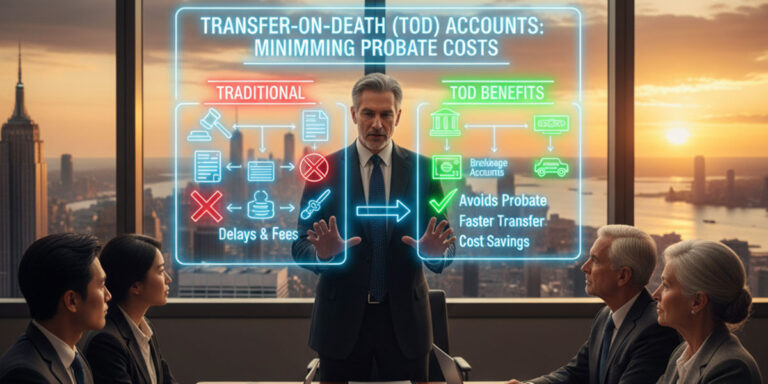
- Transfer-on-Death (TOD) Accounts: Similar to POD accounts, these apply to investment accounts and pass directly to the beneficiary.
- “Totten Trusts” or Payable-on-Death (POD) Bank Accounts: These accounts are specifically designed to transfer funds to a named beneficiary upon the account holder’s death without probate.
- Gifting During Lifetime: While not directly avoiding probate for existing assets, making gifts during your lifetime can reduce the overall size of your estate that might be subject to probate. However, it’s important to be aware of gift tax implications.
Consider a Westchester resident who wants to ensure their children can access their savings quickly. Instead of leaving a large savings account solely in their name, they could convert it to a POD account, naming their children as beneficiaries. Upon death, the funds would be accessible to the children without going through probate.
It is crucial to understand that simply having a will does not avoid probate. A will directs how assets are distributed, but those assets typically must still go through the probate process to be formally transferred. For comprehensive wills and trusts that effectively minimize probate, consulting with an experienced estate attorney is essential. We can help you implement the right strategies for your specific situation.
What is an Executor and Their Responsibilities?
The executor is the personal representative of a deceased person’s estate. They are typically named in the will and are responsible for administering the estate according to the deceased’s wishes and New York law. The role is significant and carries substantial legal and financial responsibilities. For estates in Westchester, the executor must navigate the procedures of the Surrogate’s Court.
Key Responsibilities of an Executor:
- Locating the Will: The executor’s first task is to find the deceased’s original last will and testament.
- Initiating Probate: They are responsible for filing the will and a petition for probate with the appropriate Surrogate’s Court (in this case, the Westchester County Surrogate’s Court).
- Notifying Beneficiaries and Heirs: The executor must formally notify all beneficiaries named in the will and any intestate heirs (those who would inherit if there were no will).
- Gathering Assets: This involves identifying, collecting, and securing all assets owned by the deceased. This can include bank accounts, real estate, vehicles, investments, and personal property.
- Appraising Assets: For many assets, an accurate appraisal is necessary to determine their fair market value as of the date of death. This is crucial for tax purposes and inventory.
- Managing Estate Finances: The executor must open an estate bank account, deposit all incoming funds, and manage the estate’s finances throughout the administration.
- Paying Debts and Taxes: All valid debts of the deceased, including mortgages, credit cards, medical bills, and funeral expenses, must be paid. Federal and New York State estate taxes (if applicable) must also be calculated and paid.
- Filing Tax Returns: The executor is responsible for filing the deceased’s final income tax return and any required estate tax returns.
- Distributing Assets: After all debts and taxes are settled, the executor distributes the remaining assets to the beneficiaries according to the terms of the will.
- Filing a Final Accounting: The executor must provide a final accounting to the court and beneficiaries, detailing all transactions.
- Closing the Estate: Once the court approves the final accounting, the executor files the necessary documents to formally close the estate.
For example, imagine an executor of an estate in Westchester who discovers a valuable collection of art. They would need to arrange for professional appraisal, secure the art, and then decide, based on the will or consultation with beneficiaries, whether to sell it or distribute it. This requires careful management and adherence to legal standards.
The role of an executor is one of significant trust and responsibility. It can be demanding, especially for those unfamiliar with legal and financial matters. Engaging an experienced probate attorney is highly recommended. We can guide the executor through each step, ensuring all duties are performed correctly and efficiently. Our firm offers comprehensive support for executors. This allows them to fulfill their obligations with confidence.
The Role of a New York Probate Attorney
Navigating the New York probate process can be exceptionally challenging, especially for individuals who are grieving. The complexities of Surrogate’s Court procedures, legal requirements, and estate administration demand expertise. This is where a skilled probate attorney becomes an invaluable asset. At Morgan Legal Group, we provide comprehensive legal guidance to executors and beneficiaries.
How an Attorney Assists with Probate:
- Guidance on Will Validity: We help determine if the will is valid and guide the executor through the initial filing.
- Court Filings and Procedures: We prepare and file all necessary documents with the Westchester County Surrogate’s Court. This ensures compliance with strict deadlines and legal formats.
- Asset Identification and Valuation: We assist in identifying all probate assets and recommend qualified appraisers when needed.
- Debt and Claim Resolution: We help the executor manage creditor claims, review the validity of debts, and negotiate settlements.
- Tax Compliance: We work with tax professionals to ensure the deceased’s final income tax return and any estate tax returns are filed accurately and on time.
- Estate Administration: We advise the executor on managing estate finances, opening an estate bank account, and making distributions.
- Resolving Disputes: If any disputes arise among beneficiaries or creditors, we represent the executor and work towards an amicable resolution or litigate if necessary.
- Navigating Complex Situations: We handle cases involving contested wills, missing heirs, or unique asset types.
- Ensuring Executor Protection: By ensuring all legal requirements are met, an attorney helps protect the executor from personal liability for errors or omissions.
- Expediting the Process: Our experience and familiarity with the court system can often streamline the probate process, saving time and reducing stress.
Consider a scenario where a family in Westchester has a deceased relative with a business interest. The executor might be unsure how to value the business, handle its sale or transfer, and deal with associated tax implications. An experienced attorney can guide them through this intricate process, protecting the estate’s value.
Engaging an attorney early in the probate process is crucial. It allows for proactive planning and avoids potential pitfalls. Morgan Legal Group offers dedicated legal support. We help executors fulfill their duties effectively and ensure beneficiaries receive their rightful inheritance. Our estate planning and probate services are designed to provide peace of mind during a difficult time.
Probating an Estate Without a Will (Intestacy)
When a person dies without leaving a valid will, they are said to have died “intestate.” In New York, the distribution of their assets is then governed by the state’s laws of intestacy. The probate process still occurs, but it’s referred to as “administration” rather than probate. The Surrogate’s Court appoints an administrator to settle the estate. For residents of Westchester, this would be handled by the Westchester County Surrogate’s Court.
New York Intestacy Laws:
New York Estates, Powers and Trusts Law (EPTL) § 4-1.1 outlines how an intestate estate is distributed. The order of priority for inheriting generally follows:
- Surviving Spouse and Children: If the deceased is survived by a spouse and children, the spouse typically receives the first $50,000 of the estate plus one-half of the remaining estate. The children share the other half. If there is a spouse but no children, the spouse inherits the entire estate.
- Children Only: If there is no surviving spouse but there are children, the children inherit the entire estate equally. If a child has predeceased the decedent, their share may go to their descendants (grandchildren of the decedent).
- Parents: If there is no surviving spouse or children, the deceased’s parents inherit the estate.
- Siblings: If there are no surviving spouse, children, or parents, siblings inherit the estate.
- More Distant Relatives: If none of the above relatives exist, the estate may pass to grandparents, aunts, uncles, cousins, and so on, according to a specific order of consanguinity.
Administration Process:
The administration process shares many similarities with probate:
- Petition for Administration: A close relative (usually the surviving spouse or a child) files a petition with the Surrogate’s Court seeking to be appointed as administrator.
- Court Appointment: The court reviews the petition and, if all requirements are met, appoints an administrator. The court issues “Letters of Administration” granting the administrator authority.
- Administrator’s Duties: The administrator has responsibilities similar to an executor. They must gather assets, pay debts and taxes, and distribute the remaining estate according to intestacy laws.
- Surety Bond: The court often requires an administrator to post a surety bond to protect the estate, especially if there are minor beneficiaries.
Consider a scenario where a single individual in Westchester passes away without a will. They have a savings account and a car. Their closest surviving relatives are their parents and a sibling. Under New York intestacy law, their parents would likely inherit the estate, as they have higher priority than siblings. The administrator would be appointed by the court to manage these assets and distribute them accordingly.
Dying intestate can lead to unintended heirs inheriting assets, or assets going to relatives the deceased would not have chosen. It can also create family disputes and prolong the settlement process. A well-drafted estate plan, including a will, ensures your assets are distributed according to your wishes. Our firm strongly advises clients to create a will to avoid the complexities and potential unfairness of intestacy laws.
The Importance of Estate Planning to Avoid Probate
While understanding the New York probate process is essential, proactive estate planning is paramount. The primary goal of comprehensive estate planning is often to minimize or eliminate the need for probate. This ensures a smoother, faster, and more private transfer of assets to your loved ones. At Morgan Legal Group, we help clients in Westchester and beyond establish robust estate plans.
Benefits of Avoiding Probate Through Estate Planning:
- Saves Time: Probate can take many months, even years. Assets transferred outside of probate can often be accessed by beneficiaries much sooner.
- Reduces Costs: Probate involves court fees, executor commissions, and potentially higher legal fees. Avoiding probate can significantly lower these expenses.
- Maintains Privacy: Probate is a public process. A will and the inventory of assets become public records. Trusts and other non-probate transfers keep your financial affairs private.
- Reduces Stress for Heirs: Grieving families often face the burden of complex legal procedures. An estate plan that avoids probate lessens this burden.
- Control Over Asset Distribution: Planning allows you to dictate exactly who receives what, when, and under what conditions, rather than relying on state intestacy laws.
- Protection for Beneficiaries: Trusts can provide ongoing management of assets for beneficiaries who are minors, have special needs, or are not financially savvy.
Effective estate planning tools include:
- Revocable Living Trusts: As mentioned earlier, assets titled in a living trust pass directly to beneficiaries managed by a trustee, bypassing probate.
- Wills: While a will itself goes through probate, it is a critical document for directing the distribution of probate assets and naming guardians for minor children. A “pour-over will” can work in conjunction with a trust, directing any remaining probate assets into the trust.
- Beneficiary Designations: Strategically naming beneficiaries on accounts like life insurance and retirement funds ensures these assets pass directly to your chosen individuals.
- Joint Ownership: Holding assets with rights of survivorship can simplify transfer, though it has implications for creditor protection and control.
- Powers of Attorney and Advance Directives: While not directly related to probate avoidance, these documents (like a Power of Attorney) are crucial components of a comprehensive plan. They appoint someone to manage your affairs if you become incapacitated, preventing the need for court-appointed guardianship.
Consider a Westchester couple who wants to ensure their vacation home passes smoothly to their adult children without probate delays or public scrutiny. They could retitle the property into a revocable living trust. This ensures the property is managed and distributed according to their wishes, privately and efficiently, outside the probate court system.
Our firm emphasizes the importance of regular review and updates to your estate plan. Life circumstances change, and so should your plan. We help you craft personalized strategies for your wills and trusts, ensuring your legacy is protected and your loved ones are cared for. Schedule a consultation with us to discuss your estate planning needs.
Probate and Elder Law Considerations in New York
For seniors in New York, especially those residing in Westchester, elder law and probate are often interconnected. Elder law encompasses a range of legal issues relevant to seniors, including estate planning, long-term care planning, and protection against exploitation. Understanding these connections is vital for seniors and their families.
How Elder Law Intersects with Probate:
- Medicaid Planning and Long-Term Care: A significant concern for seniors is the cost of long-term care. Elder law attorneys help seniors plan for this by strategically transferring assets. This can involve using trusts or gifting to qualify for Medicaid benefits. Assets transferred for Medicaid planning purposes need to be carefully managed to avoid complications during subsequent probate proceedings.
- Guardianship Proceedings: If a senior becomes incapacitated and has not established a Power of Attorney or trust, a court may need to appoint a guardian. This is a guardianship proceeding, which is handled by the Surrogate’s Court. Guardianship can be a costly and public process, which proper estate planning aims to avoid.
- Preventing Elder Abuse and Financial Exploitation: Elder law attorneys also focus on protecting seniors from scams, fraud, and undue influence. Evidence of such issues can complicate probate proceedings if a will is challenged or if assets were improperly transferred. Our firm has a dedicated focus on elder abuse prevention and intervention.
- Revocable Living Trusts: As mentioned, trusts are a key tool in elder law. They allow for seamless asset management during incapacity and bypass probate upon death, offering privacy and efficiency for heirs.
- Wills and Healthcare Directives: Even with extensive elder law planning, a will remains essential for distributing any remaining probate assets. Advance healthcare directives and living wills ensure a senior’s medical wishes are respected, which can sometimes impact estate administration decisions.
Imagine a senior in Westchester who has accumulated significant assets. They are concerned about the cost of potential future nursing home care. An elder law attorney can help them create a Medicaid-compliant trust. This trust holds their assets, allowing them to qualify for government assistance if needed. Upon their passing, the remaining assets in the trust can be distributed to their beneficiaries, bypassing the probate process entirely. This is far more efficient than depleting their life savings and then relying on probate to distribute what’s left.
Furthermore, if a senior becomes unable to manage their finances, a pre-established Power of Attorney allows a trusted individual to act on their behalf. Without one, a guardianship proceeding might be necessary, which is time-consuming and can be contentious. Our firm provides dedicated NYC Elder Law services tailored to the unique needs of seniors in the region.
These elder law considerations are integral to a holistic approach to estate and legacy planning. They ensure seniors can maintain their independence and dignity while safeguarding their assets for the future. We aim to provide peace of mind for both the senior and their family.
Conclusion: Navigating Probate in Westchester with Morgan Legal Group
The New York probate process, particularly for estates in Westchester County, can be a complex legal undertaking. It requires adherence to strict court procedures, meticulous record-keeping, and a thorough understanding of state laws. Losing a loved one is an emotionally taxing experience, and navigating probate adds an additional layer of stress. Our firm, Morgan Legal Group, is dedicated to simplifying this process for our clients.
We understand that every estate is unique, presenting its own set of challenges and requirements. Whether you are an executor tasked with administering an estate, a beneficiary awaiting inheritance, or an individual looking to plan your own estate to avoid probate, our experienced legal team is here to help. We offer compassionate guidance and authoritative legal counsel.
Our expertise spans all aspects of estate planning, probate and administration, wills and trusts, and elder law. We are committed to ensuring that your loved one’s affairs are settled efficiently, accurately, and with the utmost respect. We help protect your rights and preserve your legacy.
Don’t navigate the complexities of Westchester probate alone. Let the experienced attorneys at Morgan Legal Group provide the support and clarity you need. We are committed to achieving the best possible outcome for you and your family.
We invite you to contact us today to discuss your situation. You can also schedule a consultation with our dedicated team. For your convenience, you can also find us on Google My Business to learn more about our services and client testimonials.