Navigating Probate in Westchester County with Confidence
Experiencing the loss of a loved one brings profound grief. Beyond the emotional toll, families often face the daunting task of settling the deceased’s estate, a complex legal process known as probate. For those in Westchester County, this journey through the Surrogate’s Court can feel overwhelming, riddled with unfamiliar procedures and strict deadlines. At Morgan Legal Group, we stand as your dedicated and compassionate guide, offering expert legal assistance to ensure a smooth and respectful administration of your loved one’s legacy.
Probate provides the essential legal framework for validating a will, identifying assets, settling debts and taxes, and distributing remaining property to rightful heirs or beneficiaries. It ensures legal certainty and safeguards against future disputes. Without a clear understanding of New York State law and local Westchester County court nuances, navigating this process alone can lead to significant delays and potential errors. Our mission is to demystify probate, transforming a challenging time into a manageable path toward resolution and peace of mind.
What Does Probate Entail in New York?
At its core, probate is the court-supervised process that confirms the authenticity of a deceased person’s will and oversees its directives. If no will exists, the court applies New York’s intestacy laws to legally transfer property. The Surrogate’s Court appoints either an executor (if named in a will) or an administrator (in cases of no will) to manage the estate’s affairs. This appointed individual holds the responsibility for gathering all assets, paying outstanding financial obligations, addressing any taxes, and ultimately distributing the remaining property.
The necessity of probate establishes legal certainty. It guarantees that all valid debts are paid before assets are distributed, protecting heirs from future claims. Furthermore, it provides the formal mechanism required to legally transfer ownership of significant assets, such as real estate. For example, a property cannot legally transfer to a new owner without a court order issued through the probate process. This legal oversight protects both the estate and those inheriting from it. For more information on the court system, you can visit the official New York State Unified Court System website.
When Probate Becomes Necessary in Westchester County
Generally, probate is required for any asset held solely in the deceased person’s name that does not have a designated beneficiary or joint owner with rights of survivorship. This often includes individual bank accounts, brokerage accounts, vehicles, and real estate titled exclusively in the decedent’s name. Even seemingly straightforward estates often encounter complex legal requirements.
Consider a scenario where an individual owned a family home in White Plains, New York, as their primary significant asset. If the deed was solely in their name and their will specifies a particular beneficiary, the probate process becomes indispensable to legally transfer ownership of that home. Without probate, the property’s title remains encumbered, making it difficult to sell or refinance in the future.
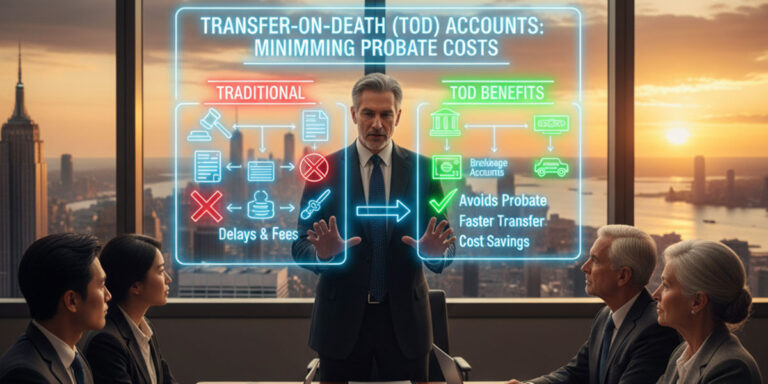
Conversely, certain assets typically bypass the probate process. These include assets held within a trust, jointly owned assets with a right of survivorship (like a joint bank account), and accounts with payable-on-death (POD) or transfer-on-death (TOD) designations. Understanding the distinct nature and titling of these assets is critical. A knowledgeable wills and trusts attorney can strategically structure your estate to minimize or even eliminate probate for your beneficiaries, offering greater efficiency and privacy.
The Probate Journey in Westchester: A Step-by-Step Guide
The probate process in Westchester County generally follows a structured sequence, though local court practices can influence specific timelines and documentation. Here is a typical overview:
1. Initiating the Process: Petitioning the Surrogate’s Court
The probate journey begins by filing a formal petition with the Westchester County Surrogate’s Court. This document requests the court to admit the will to probate (if one exists) and officially appoint an executor. The petition requires detailed information about the deceased, their will, the nominated executor, and the names and addresses of all potential beneficiaries and statutory distributees (those who would inherit if there were no will).
Accurately identifying all interested parties is crucial, including the surviving spouse, children, parents, and siblings. Providing comprehensive and precise information from the outset helps prevent delays. Our firm meticulously prepares and files all necessary documentation, ensuring a strong start to the process.
2. Informing All Interested Parties
Following the petition’s submission, all interested parties must receive formal notification. This crucial notification process, known as “service of process,” ensures everyone with a potential stake in the estate is aware of the probate proceedings. These individuals have a legal right to appear in court and present any objections they may hold.
For instance, if a beneficiary resides outside of New York State, specific legal procedures may be necessary to properly serve them notice. Adhering to these notification requirements is fundamental, as failure to comply can invalidate the entire probate process. A skilled probate lawyer expertly manages this intricate notification process, guaranteeing all legal mandates are met.
3. Validating the Will and Appointing Authority
If no one contests the will, the court typically admits it to probate, issuing a formal order that declares the will legally valid. For a will to be admitted, it must fulfill specific legal criteria, including proper execution and proof of the testator’s (the person who made the will) intent and mental capacity at the time of signing.
Should the will face a challenge, the court will schedule hearings to address the objections, potentially prolonging the probate process significantly. Common grounds for contesting a will include allegations of lack of testamentary capacity, undue influence, fraud, or improper execution. Morgan Legal Group possesses extensive experience in handling will contests, diligently working to protect the will’s integrity.
4. Inventorying and Valuing Estate Holdings
Once the court admits the will to probate, it issues “Letters Testamentary” to the executor. If no will exists, “Letters of Administration” are issued to an appointed administrator, typically a close family member. These letters serve as the executor’s or administrator’s official legal authority to act on behalf of the estate.
Armed with these letters, the executor can access bank accounts, transfer property titles, and undertake other necessary actions to manage the estate. This is a pivotal step that empowers the individual responsible for settling the estate. Selecting a trustworthy and capable executor is vital, and we recommend discussing the extensive responsibilities involved when considering potential appointees.
5. Settling Debts and Tax Obligations
The executor must create a comprehensive inventory of all the deceased person’s assets, encompassing real estate, bank accounts, investments, personal property, and other valuables. Each asset requires valuation as of the date of death. This inventory forms the foundation for calculating any applicable estate taxes and facilitating asset distribution.
Accurate valuation is paramount. For instance, a home in Westchester County may necessitate a professional appraisal to ascertain its fair market value. Similarly, valuable collections or business interests might require specialized valuation experts. Our team assists executors in precisely identifying and valuing all estate assets, ensuring accuracy and compliance throughout the process.
6. Distributing Inherited Assets
The executor is responsible for identifying and paying all legitimate debts of the deceased, including mortgages, credit card balances, medical bills, and other outstanding financial obligations. New York State law outlines specific priority rules for debt payment. Furthermore, estate taxes may be due. While federal estate taxes impact only very large estates, New York imposes its own estate tax with lower thresholds. Proactive estate planning during one’s lifetime can significantly reduce or even eliminate these tax burdens. Our firm advises on both federal and New York estate tax considerations. Even after death, seeking guidance from an estate planning attorney can be beneficial to address tax liabilities.
After all debts, taxes, and administrative expenses are paid, the executor distributes the remaining assets to the beneficiaries as detailed in the will, or according to New York’s intestacy laws if no will exists. This distribution demands meticulous care and thorough documentation. The executor typically prepares an “accounting,” a detailed report of all estate transactions, including income received and expenses paid. This accounting usually requires court approval. For example, if the will bequeaths specific pieces of jewelry to different grandchildren, the executor must ensure each receives their designated item. A transparent and organized distribution process is key to preventing disputes among beneficiaries.
Overcoming Common Probate Hurdles in Westchester
While the probate process generally follows a clear structure, several factors can introduce complexities in Westchester County:
Contested Wills: Addressing Disputes
As noted, individuals who believe they have not been fairly treated or suspect the will was not validly executed may challenge its authenticity. Grounds for a contest can include allegations of undue influence, lack of testamentary capacity, fraud, or duress. These challenges can escalate into protracted and costly litigation.
Imagine a scenario where a child suspects their parent was coerced into altering their will shortly before their passing. This situation would likely initiate a will contest. Our firm possesses extensive experience representing both those upholding a will’s validity and those challenging it, striving for efficient resolution of these sensitive disputes.
Navigating Beneficiary Disagreements
Even without a formal will contest, beneficiaries may encounter disagreements regarding various aspects of estate administration, such as asset valuation, the executor’s actions, or the interpretation of specific will provisions. Such disputes can create significant friction and delay the final distribution of assets.
For instance, siblings might dispute the sale price of a family home intended for division among them. Open communication and a clear understanding of legal rights are essential for resolving these disagreements. A neutral third party, such as an experienced attorney, can effectively mediate these disputes, fostering a more harmonious resolution.
Managing Complex or Substantial Estates
Estates featuring significant assets, multiple properties, intricate business interests, or international holdings present heightened administrative challenges. Valuing and managing these diverse assets requires specialized knowledge and meticulous attention to detail. For example, a business owner in Westchester County might leave behind a complex company that demands careful valuation, potential sale, or transfer of ownership.
Navigating the intricacies of business valuations, stock transfers, or international property laws demands expertise beyond basic probate procedures. Morgan Legal Group is well-equipped to handle these complex matters, ensuring all assets are managed and distributed appropriately and in accordance with all legal requirements.
Locating Unidentified or Absent Heirs
Occasionally, an estate may involve beneficiaries or heirs whose identities or current whereabouts remain unknown. Locating these individuals can prove to be a challenging and time-consuming endeavor. The court mandates proof that all reasonable efforts have been made to identify and notify all potential heirs.
This might involve engaging private investigators or conducting extensive genealogical research. Failure to identify all potential heirs can jeopardize the validity of the probate proceedings. We employ diligent methods to uncover all necessary information, ensuring compliance and facilitating the estate’s proper finalization.
How a Westchester Probate Lawyer Provides Essential Support
Engaging a qualified probate lawyer in Westchester County offers numerous invaluable benefits. We serve as your advocate, advisor, and navigator through the often-confusing legal landscape, providing clarity and confidence.
Expert Navigation of Legal Complexities
Our attorneys possess profound knowledge of New York probate law and Westchester County’s specific court procedures. We ensure all filings are accurate, deadlines are met, and legal requirements are meticulously satisfied. This expertise significantly minimizes the risk of errors that could lead to costly delays or legal challenges, protecting the estate’s integrity.
Vigorous Courtroom Representation
We steadfastly represent your interests within the Surrogate’s Court. This includes filing necessary petitions, responding promptly to court inquiries, and appearing at all required hearings. Should the will be contested or disputes arise, we provide strong, assertive legal representation to protect your rights and safeguard the estate’s assets effectively.
Diligent Estate Management
We actively assist executors in identifying, accurately valuing, and skillfully managing all estate assets. We guide them comprehensively through the process of paying debts and taxes, ensuring the proper and timely distribution of remaining assets to beneficiaries in strict accordance with the will or New York law, preventing missteps.
Shielding Executors from Personal Liability
Executors can face personal liability for errors or mismanagement of an estate. Our expert guidance empowers executors to fulfill their fiduciary duties correctly, thereby shielding them from potential legal repercussions. We ensure that all actions taken align with legal best practices, providing a layer of critical protection.
Delivering Efficiency and Peace of Mind
By entrusting the probate process to experienced legal professionals, you can significantly reduce stress and focus on healing and remembrance. We streamline the entire process, working efficiently to settle the estate as quickly and smoothly as possible, providing you with invaluable peace of mind during an inherently challenging period.
Why Entrust Your Estate to Morgan Legal Group?
Morgan Legal Group has proudly served the Westchester County community for many years, offering unwavering dedication and expertise. Our team comprises seasoned attorneys who deeply understand the intricacies of estate law. We are committed to delivering personalized legal services meticulously tailored to the unique needs of each client, ensuring a bespoke approach.
Our founding attorney, Russell Morgan, Esq., brings over 30 years of extensive experience in estate planning, probate, and elder law. This profound background ensures that you receive advice grounded in deep legal knowledge and practical, real-world experience. We pride ourselves on our empathetic approach, recognizing that our clients are often navigating significant personal loss.
We prioritize transparent communication, consistently keeping our clients fully informed at every stage of the process. Our goal extends beyond merely settling an estate; we strive to do so in a manner that honors the deceased’s wishes and meticulously protects the financial well-being of their loved ones. Whether you require assistance with a straightforward estate or a highly complex administration, we are here to provide steadfast support.
Proactive Planning: Securing Your Legacy Now
While this guide focuses on the probate process, it also serves as a critical reminder of the immense importance of proactive estate planning. A thoughtfully crafted estate plan can significantly simplify the probate process for your loved ones, or even help them avoid it entirely. This includes preparing a legally valid will, establishing appropriate trusts, and executing essential documents such as a Power of Attorney and advance directives.
Proper wills and trusts ensure your assets are distributed precisely according to your wishes, minimize potential estate taxes, and allow you to appoint guardians for minor children. Considering your options now can spare your family considerable time, expense, and emotional distress later. Morgan Legal Group offers comprehensive estate planning services to help you create a robust plan that meets your specific goals and protects your cherished legacy for generations to come.
Connect With Our Westchester Probate Team
If you are facing the complexities of the probate process in Westchester County or wish to discuss your estate planning needs, please do not hesitate to reach out to Morgan Legal Group. We are here to provide the experienced, compassionate legal support you need during this critical time. Let us help you navigate the intricacies of probate with confidence and invaluable peace of mind.
To schedule a consultation with one of our experienced probate lawyers in Westchester County, please schedule a consultation or contact us directly. We are deeply committed to serving the Westchester community and ensuring your legal needs are met with utmost professionalism and care. You can also find more information about our services on our Home page and through our Google My Business profile. For insights into New York’s tax laws, consider visiting the official New York State Department of Taxation and Finance.
For those seeking to understand broader legal issues affecting seniors in New York, our NYC Elder Law services and resources on Elder Abuse are also readily available. We are dedicated to providing comprehensive legal support for families across the region, ensuring holistic care.