Compassionate Guidance Through Probate in Westchester County
When a loved one passes away, families in Westchester County often face the complex and emotionally taxing journey of probate. This legal process ensures the proper distribution of a deceased person’s assets and the settlement of their affairs. Navigating the Surrogate’s Court in Westchester requires not only a deep understanding of New York’s intricate estate laws but also compassionate guidance. At Morgan Legal Group, our experienced Westchester Probate Lawyer team provides dedicated support, helping you honor your loved one’s wishes with clarity and efficiency during this difficult time.
Understanding Probate in New York State
Probate is the formal legal procedure that validates a deceased individual’s will and oversees the administration of their estate. This process involves identifying all assets, settling outstanding debts and taxes, and finally distributing the remaining inheritance to beneficiaries. If a person dies without a valid will, the court initiates “estate administration,” where New York state law dictates how assets are shared among heirs. The core purpose of probate is to establish a clear, legal framework for asset transfer, protecting both creditors and rightful beneficiaries from potential disputes or mismanagement.
When Does an Estate Require Probate in Westchester County?
Many believe all estates automatically enter probate, but this isn’t always true. In Westchester, probate generally becomes necessary when the deceased held assets solely in their name that exceed a specific value. Common examples include real estate titled individually, bank accounts without “payable-on-death” (POD) designations, or investment accounts not held in a trust. Assets like life insurance policies or retirement accounts with named beneficiaries typically bypass probate, transferring directly. If a will exists, it must undergo validation by the Surrogate’s Court. Even without a will, the court must appoint an administrator to manage the estate according to intestacy laws. Our Westchester Probate Lawyer team can assess your unique situation to determine if probate is the right path for your family.
Navigating the Westchester Probate Process: Key Stages
The probate journey in Westchester County follows a structured legal path, commencing with the submission of essential documents to the Surrogate’s Court. This initial filing typically includes the original will (if available), a formal petition for probate, and a preliminary inventory of the decedent’s assets. The court then issues a citation, formally notifying all interested parties, such as potential heirs and named beneficiaries, about the proceedings.
Appointing the Estate Representative: Executor or Administrator
After the court reviews the documents and admits the will, it officially appoints an Executor – the person named in the will to manage the estate. If no will exists, or if the named Executor cannot serve, the court designates an Administrator. This appointed individual gains the legal authority to act on behalf of the estate. Their immediate responsibilities include identifying, securing, and gathering all of the deceased’s assets. This critical phase often requires meticulous attention to detail and can be time-consuming. Our firm guides clients through each of these crucial stages, simplifying complexities.
Addressing Creditor Claims and Debts
A fundamental aspect of estate administration involves notifying creditors about the decedent’s passing. New York law typically mandates publishing a notice in a local newspaper and sending direct notices to known creditors. The Executor or Administrator must carefully review all submitted claims. Valid debts, including funeral expenses, medical bills, and other financial obligations, must be paid from the estate’s assets, following a specific legal priority. Managing these claims correctly is vital, especially if the estate’s assets are insufficient to cover all liabilities. Our experienced Westchester Probate Lawyer team skillfully manages creditor negotiations, ensuring all legal requirements are met fairly and efficiently.
Distributing Assets to Beneficiaries and Closing the Estate
Once all debts, taxes, and administrative expenses are settled, the Executor or Administrator proceeds with distributing the remaining assets. This distribution strictly adheres to the terms outlined in the will or, in cases of intestacy, according to New York’s statutory guidelines for heirs. A final accounting document is then prepared for both the court and the beneficiaries, detailing every financial transaction that occurred during the estate’s administration. This accounting ensures transparency and accountability. Upon the court’s approval of this final report, the Executor or Administrator receives their discharge, and the estate officially closes. Our legal team meticulously oversees this process, ensuring accurate and timely distributions.
The Fiduciary’s Role: Executor or Administrator Responsibilities
Serving as an Executor or Administrator involves significant legal and ethical duties. This individual acts as a fiduciary, meaning they must always prioritize the best interests of the estate and its beneficiaries. Their extensive responsibilities include managing estate finances, making prudent decisions regarding asset preservation, filing necessary tax returns, and representing the estate in any legal matters. This role carries substantial liability; errors or negligence can lead to severe consequences. Many fiduciaries wisely choose to engage legal counsel. Our seasoned attorneys provide invaluable guidance to Executors and Administrators, helping them navigate their complex responsibilities with confidence.
When a Will Faces Challenges: Contesting Probate
While the probate process aims to validate a will, interested parties can sometimes challenge its legitimacy. Common grounds for contesting a will include allegations of undue influence, a lack of testamentary capacity (the ability to understand the will’s nature), fraud, duress, or improper execution of the document. Such challenges can significantly prolong the probate timeline and lead to costly litigation. If you suspect a will’s invalidity or find yourself defending against a contest, strong legal representation is indispensable. Our firm possesses extensive experience in will contests, vigorously protecting our clients’ rights, whether they are challenging or upholding a will’s validity.
Probate Without a Named Executor or a Will (Intestacy)
Sometimes a will omits naming an Executor, or the chosen Executor cannot serve. In these instances, the court appoints an Administrator C.T.A. (cum testamento annexo, or “with the will annexed”). This administrator assumes all the powers and duties of an Executor, ensuring the will’s terms are carried out. The Surrogate’s Court typically prioritizes certain individuals, such as a major beneficiary, for this role.
Even more commonly, individuals pass away without any valid will at all, a situation known as intestacy. In Westchester County, New York law then dictates the distribution of the deceased’s assets. The Surrogate’s Court appoints an Administrator to manage the estate, following specific statutory guidelines for heir hierarchy, usually starting with a surviving spouse and children, then extending to parents or siblings. Our estate administration lawyers assist families in understanding their rights and obligations in these complex intestate cases.
Proactive Planning: Minimizing Probate Through Estate Strategies
While probate serves a crucial function, it can be a lengthy, expensive, and public process. Comprehensive estate planning offers the most effective way to either avoid or significantly reduce the need for probate. By proactively creating legal documents, you dictate how your assets are managed during your lifetime and distributed after your passing, often bypassing the court system entirely.
The Power of a Revocable Living Trust
A revocable living trust stands as a cornerstone of probate avoidance. You transfer assets into this trust during your lifetime, maintaining full control as the grantor and often as the initial trustee. Upon your death, a designated successor trustee swiftly manages and distributes trust assets according to your precise instructions, typically without court involvement. This method ensures privacy, speed, and continuous management, even if you become incapacitated. Establishing a trust is a powerful step toward simplifying your legacy for your loved ones. Our Westchester Probate Lawyer team helps clients explore the benefits of various trust structures.
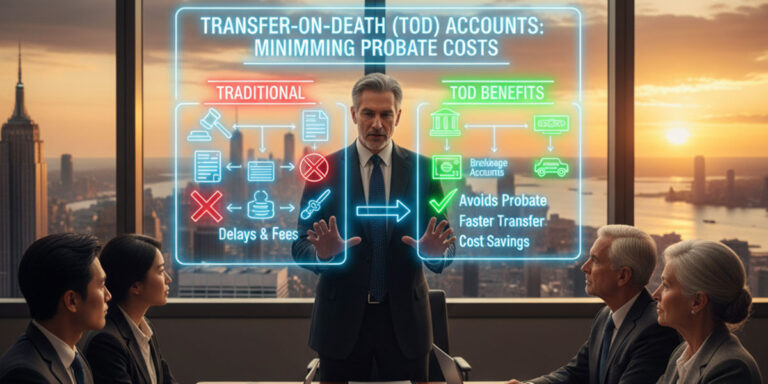
Beneficiary Designations & POD/TOD Accounts
Another straightforward method to bypass probate involves strategically utilizing beneficiary designations and “payable-on-death” (POD) or “transfer-on-death” (TOD) accounts. Assets such as life insurance policies, retirement accounts (e.g., 401(k)s, IRAs), and certain bank or brokerage accounts allow you to name beneficiaries directly. Upon your passing, these assets transfer seamlessly to your chosen individuals, outside of probate. Regularly reviewing and updating these designations with your attorney is crucial, ensuring they align with your current wishes and saving your heirs considerable time and expense.
Essential Lifetime Protections: Power of Attorney & Health Care Proxy
Beyond a will, thoughtful estate planning includes provisions for potential incapacity during your lifetime. A Durable Power of Attorney (POA) empowers a trusted individual to manage your financial affairs if you become unable to do so yourself. This document ensures bills are paid, investments are managed, and your financial life continues without interruption, preventing the need for potentially intrusive and costly court-appointed guardianship.
Similarly, a Health Care Proxy designates someone to make medical decisions on your behalf should you lose the capacity to do so. These vital documents work in tandem to ensure your wishes are respected and your well-being is protected throughout your life. Our firm helps clients craft comprehensive plans that address both lifetime needs and post-death distributions, offering complete peace of mind.
Guardianship: Protecting Minors and Incapacitated Adults
For parents of minor children, designating a guardian within a will is an absolute priority. This appointment ensures your chosen individual will care for and raise your children if both parents pass away. Without this critical designation, the court makes this deeply personal decision, which might not reflect your family’s values.
Guardianship proceedings also arise when an adult becomes incapacitated and can no longer manage their personal or financial affairs. The court then appoints a guardian to make these decisions. Our guardianship attorneys approach these sensitive matters with compassion, prioritizing the individual’s best interests.
Elder Law Concerns: Safeguarding Seniors in Westchester
Elder law addresses the unique legal challenges faced by older adults and their families. This vital area of practice includes comprehensive estate planning, strategic Medicaid planning, asset protection strategies, and proactive measures to prevent elder abuse. As individuals enter their senior years, their legal and financial landscapes often shift dramatically. Proactive legal guidance becomes indispensable to secure their future well-being and preserve their hard-earned assets.
Understanding Medicaid Planning for Long-Term Care
The escalating costs of long-term care facilities and in-home assistance represent a significant concern for many families. Our NYC Elder Law services specialize in guiding clients through the intricate process of Medicaid planning. We help eligible seniors qualify for essential government benefits, structuring