Navigating Probate in Westchester County: Your Essential Guide
Losing a loved one is a profoundly difficult experience. Amidst the grief, families in Westchester County often face the complex and often daunting process of probate and estate administration. Understanding this legal journey is crucial for ensuring your loved one’s wishes are honored and their assets are distributed appropriately and efficiently. At Morgan Legal Group, our experienced probate lawyers are dedicated to guiding you through every step with clarity, compassion, and professional expertise.
The probate process, governed by New York State law, involves a series of legal steps to validate a will, identify and inventory a deceased person’s assets, pay outstanding debts and taxes, and finally, distribute the remaining assets to the rightful heirs or beneficiaries. This can be a lengthy and intricate procedure, especially for those unfamiliar with the legal system. Our firm understands the emotional toll this period takes. Consequently, we strive to simplify the legal aspects, allowing you to focus on healing and remembrance.
Westchester County has its own specific Surrogate’s Court procedures and nuances that a local attorney can navigate effectively. Whether the deceased passed away with a valid will (testate) or without one (intestate), the probate process will commence. Our role as your legal counsel is to ensure this process is handled correctly, minimizing potential delays, disputes, and unnecessary costs. We aim to provide peace of mind during an already stressful time.
Understanding the Probate Process in New York
Probate is the legal process by which a court oversees the distribution of a deceased person’s assets. In New York, this process is handled by the Surrogate’s Court in the county where the deceased resided. The primary goals of probate are to:
- Authenticate the deceased’s last will and testament, if one exists.
- Appoint an executor (if named in the will) or an administrator (if no will exists or the named executor cannot serve).
- Identify and inventory all the deceased’s assets, including real estate, bank accounts, investments, and personal property.
- Notify creditors and beneficiaries of the death and the probate proceedings.
- Pay any outstanding debts, taxes, and administrative expenses.
- Distribute the remaining assets to the beneficiaries as directed by the will or New York intestacy laws.
The complexity and duration of the probate process can vary significantly. Factors such as the size and nature of the estate, whether there are disputes among beneficiaries, and the accuracy of the documentation all play a role. For instance, an estate with a straightforward will and easily identifiable assets will typically move through probate much faster than an estate with complex assets, contested wills, or significant debts.
Our firm provides comprehensive services to assist you with all aspects of probate and estate administration. We handle the legal filings, communicate with the court and other parties, and offer strategic advice to resolve any issues that may arise. We are committed to transparency, ensuring you are informed at every stage. This proactive approach helps prevent misunderstandings and builds trust. Moreover, we are adept at managing complex estate matters, including those involving business interests or significant real property holdings.
When is Probate Necessary in Westchester?
Probate is generally required for assets that were solely owned by the deceased and do not pass automatically to beneficiaries through other means, such as joint ownership, beneficiary designations (like on life insurance policies or retirement accounts), or trusts. If the deceased owned assets valued above a certain threshold in their sole name, probate is typically necessary.
Consider a scenario in Westchester where a parent owned a home solely in their name, along with several bank accounts. These assets would likely need to go through the probate process to be legally transferred to their heirs. Even if a will exists, it needs to be submitted to the Surrogate’s Court for validation. The court then issues “Letters Testamentary” (if there’s a will) or “Letters of Administration” (if there’s no will), granting the executor or administrator the legal authority to manage the estate.
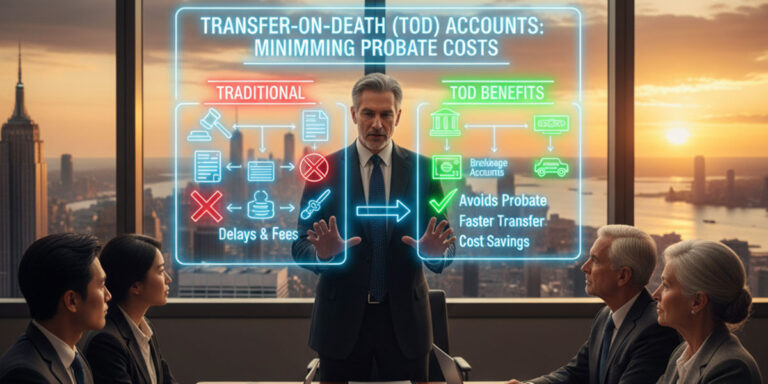
However, not all assets are subject to probate. Assets held in a living trust, for example, bypass probate entirely and are distributed according to the terms of the trust document. Similarly, assets with payable-on-death (POD) or transfer-on-death (TOD) designations, or accounts with named beneficiaries, pass directly to the designated individuals outside of the probate court’s supervision. Understanding these distinctions is critical for effective estate planning, which can help minimize or even avoid probate for your own heirs.
Our Westchester probate lawyers can help you determine which assets require probate and guide you through the process of administering those that do. We also advise on strategies to structure your estate to potentially simplify the process for your loved ones in the future. Proactive planning is key to a smoother transition. Consequently, we often recommend reviewing existing estate plans to ensure they align with current laws and individual circumstances.
The Role of the Executor or Administrator
The executor, named in the will, or the administrator, appointed by the court when there is no will or the named executor cannot serve, plays a vital role in the probate process. This individual is responsible for managing the estate and carrying out the deceased’s wishes or the court’s directives. Their duties are fiduciary, meaning they must act in the best interests of the estate and its beneficiaries.
Key responsibilities include:
- Locating and safeguarding the will.
- Filing the will or petition for administration with the Surrogate’s Court.
- Identifying and gathering all estate assets.
- Obtaining a tax identification number for the estate.
- Notifying creditors and handling claims against the estate.
- Paying taxes owed by the estate, including any applicable New York estate taxes or federal estate taxes.
- Managing estate assets during the probate period.
- Preparing an accounting of all estate transactions.
- Distributing the remaining assets to beneficiaries or heirs.
Serving as an executor or administrator can be a significant undertaking, requiring time, attention to detail, and a thorough understanding of legal and financial procedures. It is not uncommon for executors to feel overwhelmed by these responsibilities, especially when dealing with the emotional burden of grief. For example, an executor might struggle to locate all the deceased’s financial accounts or understand how to properly file tax returns for the estate.
Morgan Legal Group offers dedicated support to executors and administrators in Westchester County. We can assist with any or all of these tasks, providing clear guidance and handling the complex legal requirements. Our goal is to alleviate the burden on you, ensuring that the estate is managed efficiently and in compliance with all New York laws. We understand that many individuals appointed as executors are also grieving family members. Therefore, our approach is always supportive and patient. Moreover, we can help settle disputes that may arise between co-executors or with beneficiaries.
Probate vs. Estate Administration: Understanding the Difference
While often used interchangeably, “probate” and “estate administration” refer to slightly different aspects of the process. Probate is the legal process of proving the validity of a will and obtaining court authorization to manage an estate. Estate administration is the broader process of managing the estate’s affairs, which includes probating the will (if applicable) and then carrying out the duties of the executor or administrator.
In New York, if the deceased left a valid will, the process is referred to as “probate.” The court oversees the validation of the will and the appointment of the executor. If the deceased died without a will (intestate), the process is called “estate administration.” In this case, the court appoints an administrator, typically a close relative, to manage the estate according to New York’s laws of intestacy.
Regardless of whether there is a will or not, the core objective remains the same: to legally transfer the deceased’s assets to the rightful inheritors after all debts and taxes are settled. Both processes involve similar steps such as asset inventory, debt payment, and distribution. However, the legal framework and the specific documents filed with the court will differ depending on the presence or absence of a will.
For example, if a Westchester resident dies intestate, their spouse and children will inherit according to a statutory formula. The Surrogate’s Court will appoint an administrator to carry out this distribution. If they had a will, the Surrogate’s Court would probate that document and appoint the executor named within it to oversee the distribution as specified in the will. Our firm has extensive experience handling both probate and estate administration matters, ensuring that each case is managed with the precision and care it deserves.
We guide clients through the complexities of both scenarios, explaining the relevant New York statutes and court procedures. Our legal expertise ensures that the estate is settled correctly, whether there is a will or not. We are equipped to handle uncontested and contested matters alike. Moreover, we can help families understand the nuances of New York’s intestacy laws and the process of drafting necessary legal documents for estate administration.
Avoiding Probate: The Power of Estate Planning
While probate is a necessary legal step for many estates, it is often possible to structure your affairs to minimize or even avoid it altogether. Proactive estate planning is the key to achieving this goal. By implementing strategies during your lifetime, you can ensure that your assets pass directly to your loved ones without the delays, costs, and public scrutiny often associated with probate.
Several estate planning tools can help you avoid probate:
- Living Trusts: A revocable living trust is a powerful tool that allows you to transfer assets into the trust during your lifetime. Assets held in a living trust are not subject to probate upon your death. Instead, they are distributed to your beneficiaries according to the terms of the trust document, managed by your appointed successor trustee.
- Beneficiary Designations: Many financial accounts, such as life insurance policies, retirement accounts (401(k)s, IRAs), and payable-on-death (POD) or transfer-on-death (TOD) bank accounts, allow you to name beneficiaries directly. These assets pass directly to the named individuals outside of the probate process.
- Joint Ownership with Right of Survivorship: When assets are owned jointly with rights of survivorship, such as with a spouse or other designated individual, the surviving owner automatically inherits the deceased owner’s share of the property without probate.
- Gifting: While not a direct probate avoidance tool, strategic gifting during your lifetime can reduce the overall value of your taxable estate, potentially simplifying the probate process for any remaining assets.
The benefit of avoiding probate extends beyond simply saving time and money. It also preserves the privacy of your estate. Probate records are public, meaning anyone can access information about your assets and beneficiaries. By utilizing probate avoidance strategies, you can maintain greater control over the distribution of your wealth and keep your family’s financial matters private.
At Morgan Legal Group, we specialize in creating comprehensive estate plans tailored to your unique circumstances and goals. We help Westchester residents understand the advantages of different probate avoidance strategies and implement them effectively. Our wills and trusts attorneys work closely with you to develop a plan that best suits your needs, whether you are focused on asset protection, minimizing taxes, or ensuring a smooth and private transfer of your legacy. We also address related areas such as power of attorney and healthcare directives to ensure your affairs are managed comprehensively.
Key Considerations for Westchester Estates
Westchester County, with its diverse population and significant property values, presents unique considerations for estate planning and probate. Understanding these specific local factors can significantly impact how an estate is managed.
- Real Estate: Westchester is known for its valuable real estate. The process of transferring property ownership through probate can be complex, especially if the property is held in a way that requires a court order. It’s crucial to have clear title and proper documentation.
- New York Estate Taxes: New York has its own estate tax, separate from the federal estate tax. Estates exceeding certain thresholds may be subject to New York estate tax, necessitating careful tax planning and filings. The current New York estate tax exemption threshold for 2026 is substantial but requires precise calculations.
- Surrogate’s Court Procedures: Each county’s Surrogate’s Court may have slightly different procedural rules and timelines. Familiarity with the Westchester Surrogate’s Court is essential for efficient case processing.
- Family Dynamics and Potential Disputes: As with any community, family dynamics in Westchester can sometimes lead to disputes over wills, asset distribution, or the actions of an executor. Our firm is adept at mediating and resolving such conflicts to protect your interests and those of the estate.
For example, imagine a family with multiple adult children residing in different states, with the deceased parent having owned a primary residence and a vacation property in Westchester. Navigating the probate process for these distinct assets, dealing with out-of-state beneficiaries, and calculating potential New York estate taxes requires specialized knowledge. Our attorneys are well-versed in these intricacies and can provide the necessary guidance.
Furthermore, issues such as elder abuse or the need for guardianship proceedings may arise, especially in cases involving aging individuals or those with diminished capacity. These situations require specialized legal intervention within the Surrogate’s Court framework. Our firm is equipped to handle these sensitive matters with the utmost care and professionalism. We are committed to serving the Westchester community with comprehensive legal solutions for all their estate-related needs. The goal is always to safeguard assets and ensure the wishes of individuals are respected.
When to Seek Professional Legal Help
Navigating the probate process, especially in a jurisdiction like Westchester County, can be challenging and time-consuming. While some very simple estates might be manageable without legal assistance, most situations benefit greatly from the expertise of an experienced probate lawyer. You should consider seeking professional help if:
- The estate is complex, with significant assets or debts.
- There is a dispute among beneficiaries or potential heirs.
- The deceased’s will is unclear, contested, or believed to be invalid.
- You are the executor or administrator and feel overwhelmed by your responsibilities.
- There are concerns about potential elder abuse or the need for guardianship.
- You wish to explore strategies to avoid probate for your own estate.
- You are not a resident of New York and need to administer an estate in the state.
The cost of hiring an attorney is often outweighed by the potential savings in time, reduced legal fees, avoidance of costly mistakes, and the peace of mind that comes from knowing the process is being handled correctly. Our legal team works efficiently to manage the probate process, ensuring compliance with all Surrogate’s Court requirements and New York laws. We understand the financial implications of probate and strive to make the process as cost-effective as possible for our clients.
At Morgan Legal Group, we offer a free initial consultation to discuss your specific situation and determine how we can best assist you. We are committed to providing clear, concise, and actionable legal advice. Our goal is to simplify the probate process and alleviate the burden on you and your family. We serve clients throughout Westchester County and surrounding areas. Schedule a consultation today to learn how we can help you navigate the complexities of probate and estate administration with confidence. Our contact information is readily available.
The Morgan Legal Group Difference in Westchester
At Morgan Legal Group, we understand that dealing with the death of a loved one is an incredibly emotional and stressful time. Our approach is built on a foundation of empathy, expertise, and a steadfast commitment to serving the Westchester community. We are not just legal professionals; we are dedicated advocates who strive to make a difficult process as manageable and straightforward as possible for our clients.
Our team brings over three decades of combined legal experience in estate planning, probate, and elder law to every case. This depth of knowledge allows us to anticipate challenges, navigate complex legal landscapes, and provide comprehensive solutions. We pride ourselves on clear communication, ensuring that you are fully informed and understand every step of the probate or estate administration process. We believe that empowered clients are better able to make informed decisions during this sensitive period.
We recognize that every estate is unique, just as every family is. Therefore, we tailor our legal strategies to the specific needs and goals of each client. Whether you are an executor seeking assistance with probate, a beneficiary with questions about your inheritance, or an individual looking to plan your own estate to avoid future probate complications, we are here to help. Our estate planning services are designed to provide lasting peace of mind.
Our commitment extends beyond legal representation. We aim to build lasting relationships with our clients, offering ongoing support and guidance. For residents of Westchester County, choosing a local, experienced legal team is paramount. We are intimately familiar with the Westchester Surrogate’s Court and its procedures, which can significantly expedite the probate process. We are dedicated to protecting your rights and ensuring that your loved one’s estate is handled with the utmost respect and efficiency. Remember, proactive legal planning is the best way to safeguard your legacy and support your family.
We invite you to experience the Morgan Legal Group difference. Let us help you navigate the complexities of probate and estate administration with confidence and peace of mind. Your well-being and the proper administration of the estate are our top priorities. Don’t hesitate to reach out for professional assistance. Visit our website for more information or call us to schedule your confidential consultation.
Conclusion: Securing Your Legacy and Your Family’s Future
The probate process in Westchester County, while often a necessary legal undertaking, does not have to be an overwhelming burden. By understanding its intricacies and enlisting the support of experienced legal professionals, you can ensure that your loved one’s estate is settled correctly, efficiently, and with minimal disruption.
Morgan Legal Group stands ready to guide you through every aspect of probate and estate administration. Our deep understanding of New York law, combined with our compassionate approach, makes us the ideal partner for families navigating this challenging period. Whether you are dealing with a recent loss or planning for the future, our team is dedicated to providing you with the clarity, support, and expert legal counsel you deserve.
We encourage you to take proactive steps for your own estate planning to ease the burden on your loved ones. Services such as establishing robust wills and trusts, creating a comprehensive power of attorney, and exploring other probate avoidance strategies can make a significant difference. Our goal is to help you secure your legacy and protect your family’s financial future.
If you are in Westchester County and require assistance with probate, estate administration, or any related legal matter, please do not hesitate to contact us. We are here to answer your questions and provide the professional guidance you need. You can reach us through our website, or by calling our office. For local insights and to understand our presence in the community, please also refer to our Google My Business profile. We look forward to assisting you and ensuring your peace of mind.