Navigating Elder Law in Westchester, NY: Your Guide to Peace of Mind
Life in New York brings unique opportunities and challenges. As individuals and families in Westchester County plan for the future, the complexities of elder law often emerge as a critical concern. This specialized area of law addresses the needs of older adults and their loved ones, encompassing everything from asset protection to healthcare decisions. Understanding these legal pathways provides immense peace of mind.
At Morgan Legal Group, we stand as a trusted partner for Westchester residents. With over three decades of experience in New York State, our team delivers expert legal counsel across key elder law domains. We empower seniors and their families to safeguard assets, ensure quality care, and confidently navigate New York’s legal landscape. This guide explores essential aspects of elder law, demonstrating how our dedicated services can benefit you.
What Does Elder Law Cover? A Holistic Approach
Elder law is not a single practice area; it’s a comprehensive framework addressing the diverse needs of an aging population. These legal issues frequently overlap, demanding a holistic strategy. For example, concerns about long-term care expenses directly influence estate planning choices. Similarly, unexpected health events can necessitate guardianship, underscoring the vital role of proactive power of attorney documents.
Morgan Legal Group helps clients gain the knowledge and legal instruments essential for confronting these challenges. We believe informed decisions form the cornerstone of effective elder law planning. This guide clarifies these legal areas, outlining what to expect and how our expertise serves your specific needs in Westchester.
Estate Planning: Building Your Family’s Future Security
Estate planning forms a foundational pillar of elder law. It involves proactively organizing and arranging for the management and distribution of your assets during your lifetime and after your passing. For Westchester seniors, a thoughtfully constructed estate plan ensures your wishes are honored, assets are distributed as you intend, and loved ones receive protection. Without a plan, asset distribution can become a complex, contentious legal battle, creating significant emotional and financial strain for your family.
Key components of estate planning include creating a Last Will and Testament, establishing various trusts, and designating beneficiaries. It also incorporates planning for potential incapacitation, where documents like powers of attorney and healthcare proxies become indispensable. Our firm excels at tailoring these documents to each client’s unique circumstances, ensuring they align with current New York laws and your personal objectives.
Wills and Trusts: The Cornerstones of Your Legacy
A Will legally outlines how your assets will be distributed after your death. It also allows you to name an executor to manage your estate and appoint guardians for any minor children. In New York, a properly executed will prevents intestacy, the legal term for dying without a valid will. Intestacy often results in asset distribution according to state law, which may not align with your personal preferences or family dynamics.
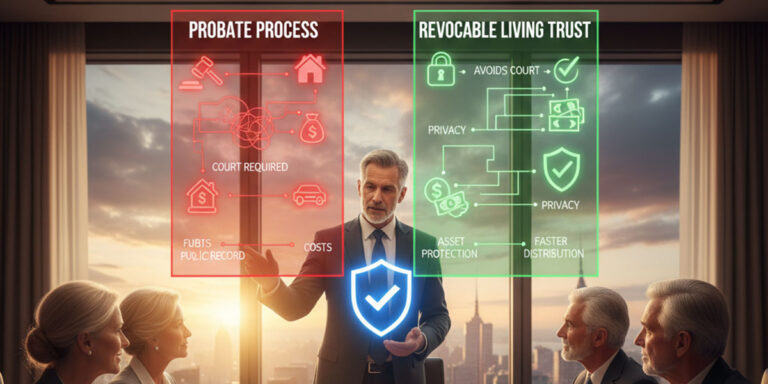
Trusts offer more sophisticated estate planning strategies. Unlike wills, which take effect post-mortem, certain trusts become effective during your lifetime. You can use trusts to manage assets for beneficiaries, avoid probate, minimize estate taxes, and provide for individuals with special needs. Understanding the distinctions between various trusts, such as revocable living trusts and irrevocable trusts, is crucial. Our attorneys guide Westchester families in selecting the most suitable trust structures to achieve their goals, whether for robust asset protection or streamlined estate administration.
Revocable vs. Irrevocable Trusts: Understanding the Differences
A revocable trust, often called a living trust, allows the grantor to modify or revoke it during their lifetime. Assets placed in a revocable trust remain accessible to the grantor, offering considerable flexibility. However, these trusts generally do not protect assets from creditors. Conversely, an irrevocable trust cannot be easily altered or revoked once established. While less flexible, irrevocable trusts often provide stronger asset protection and specific tax advantages. The choice between these depends heavily on individual circumstances and objectives. For seniors concerned about long-term care costs or preserving wealth for future generations, an irrevocable trust can serve as a vital tool.
Powers of Attorney and Advance Healthcare Directives: Planning for Incapacity
Beyond asset distribution, elder law strongly emphasizes planning for potential incapacitation. As individuals age, the risk of cognitive impairments or debilitating physical conditions increases. This makes a Power of Attorney (POA) indispensable. A POA is a legal document granting a trusted individual, known as the agent or attorney-in-fact, the authority to make financial and legal decisions on your behalf. Without a POA, your family might need to pursue a court-appointed guardianship, a process that is often lengthy, costly, and intrusive.
Similarly, Advance Healthcare Directives are critical. These include a Health Care Proxy, which designates someone to make medical decisions for you if you become unable to, and a Living Will, which articulates your wishes regarding end-of-life medical treatment. These documents ensure your medical care preferences are honored, even if you can no longer communicate them directly. Our elder law attorneys in Westchester assist clients in drafting these vital documents, ensuring clarity and legal compliance.
Guardianship in New York: When Proactive Planning is Absent
While proactive planning through powers of attorney and advance healthcare directives is highly recommended, situations arise where a court must appoint a guardian. This typically occurs when an individual becomes incapacitated without previously executing the necessary legal documents. A court-appointed guardian manages the personal and/or financial affairs of an incapacitated person. The process of seeking guardianship in New York can be complex, adversarial, and emotionally taxing for families. It demands a thorough understanding of New York’s Mental Hygiene Law and Surrogate’s Court Procedure Act.
Our firm provides dedicated representation in guardianship proceedings. Whether you seek to appoint a guardian for a loved one or find yourself involved in a guardianship dispute, our experienced attorneys guide you through every step. We strive for outcomes that best serve the incapacitated individual’s interests and well-being while respecting all parties’ rights. We approach these sensitive cases with both legal acumen and profound empathy.
The Guardianship Process: A Step-by-Step Overview
In New York, a guardianship proceeding begins with filing a petition in court. This petition outlines why a guardian is necessary and nominates an individual to serve. The court then appoints a guardian ad litem, an attorney representing the alleged incapacitated person (AIP). The AIP has the right to legal representation, and an independent medical evaluation often determines their capacity. The court considers presented evidence and ultimately decides whether to appoint a guardian and who that guardian should be. This appointment can involve managing finances, making healthcare decisions, or both. The process demands meticulous attention to legal detail and procedural requirements.
Protecting Seniors: Addressing Elder Abuse and Financial Exploitation
Sadly, seniors often become targets of elder abuse and financial exploitation. This can manifest as physical, emotional, and sexual abuse, neglect, or financial fraud. Perpetrators can include strangers, caregivers, or even family members. Detecting and addressing elder abuse requires vigilance and prompt legal intervention. As your trusted elder law attorneys in Westchester, we commit to protecting vulnerable seniors from such harm.
If you suspect a loved one experiences abuse or exploitation, seeking legal assistance immediately is crucial. Our firm helps you understand your rights and options, take legal action to stop the abuse, and protect the victim’s assets. We collaborate closely with families to ensure the safety and well-being of their elder loved ones. Reporting suspected abuse can be a difficult but essential step to prevent further harm and hold perpetrators accountable. We offer a safe, supportive environment for discussing these sensitive issues.
Recognizing the Signs of Elder Abuse and Financial Exploitation
Understanding the common signs of elder abuse is the first step toward prevention. These signs can include unexplained injuries, sudden changes in financial status or banking activity, the appearance of new and untrustworthy individuals in the senior’s life, social isolation, and significant weight loss or poor hygiene. Emotional indicators might include fear, anxiety, or depression that seems uncharacteristic. Financial exploitation could involve sudden money transfers, changes to a will or power of attorney, or unpaid bills despite adequate income. If you observe any of these red flags, acting swiftly is imperative. Contacting experienced legal counsel is a critical step in protecting a vulnerable senior.
Long-Term Care Planning: Managing Costs and Options
One of the most significant financial concerns for seniors involves the cost of long-term care. This includes in-home care, assisted living facilities, and nursing homes. Expenses associated with these services can be substantial, quickly depleting even considerable savings. Effective long-term care planning involves exploring various options for funding care while preserving assets for beneficiaries. This may include utilizing Medicare, Medicaid, long-term care insurance, or strategic use of trusts and gifting strategies.
Our Westchester elder law attorneys assist families in understanding their eligibility for various government benefits, such as Medicaid, and how to plan for potential long-term care needs. We help structure assets and income to maximize eligibility for these benefits without compromising the client’s lifestyle or legacy. This proactive approach prevents devastating financial burdens on the family when care is most needed. Planning for these costs early proves far more effective than trying to address them during a crisis.
For more detailed information on long-term care resources in New York, you can visit the New York State Department of Health’s Long Term Care Program page.
Medicaid Planning and Eligibility: A Strategic Approach
Medicaid stands as a crucial program for financing long-term care for those who qualify. However, Medicaid imposes strict income and asset limitations. For individuals seeking to qualify for Medicaid-funded long-term care, careful planning is essential. This often involves understanding spousal impoverishment rules and implementing strategies to protect a portion of a couple’s assets, known as the “allowable resource allowance.” Our firm advises clients on structuring their finances to meet Medicaid eligibility requirements without jeopardizing their spouse’s financial security or their own.
This planning can involve utilizing specific types of trusts, gifting assets (subject to look-back periods), and restructuring property ownership. This is a complex area of law, and improper planning can lead to disqualification or unexpected financial penalties. Therefore, collaborating with an experienced elder law attorney who understands New York’s Medicaid rules is indispensable. We assist families in navigating the intricate application process and ensuring all legal requirements are met.
Probate and Estate Administration in New York
When a person passes away, their estate must undergo a legal process called probate or administration. This process involves validating the deceased’s will (if one exists), identifying and appraising the deceased’s assets, paying outstanding debts and taxes, and distributing the remaining assets to the beneficiaries. In New York, the Surrogate’s Court oversees this process.
The probate process can seem confusing and time-consuming, especially for grieving families. Our firm offers comprehensive support to executors and administrators, guiding them through each stage of estate administration. We help ensure all legal requirements are met efficiently and accurately, minimizing stress and potential complications for the family. Whether your loved one passed away with or without a will, we assist in navigating the Surrogate’s Court procedures.
For additional information on court processes, you may consult the New York State Unified Court System website.
Navigating the Surrogate’s Court: Expert Guidance
New York’s Surrogate’s Court handles wills, estates, and guardianships. The process begins with filing a petition for probate (if a will exists) or administration (if no will exists). The court then issues a “Citation” to interested parties, such as beneficiaries and heirs. Hearings may be required, and deadlines for filing inventories, accountings, and other necessary documents must be strictly adhered to. Our attorneys are skilled in Surrogate’s Court practice, ensuring your estate administration proceeds smoothly and in accordance with New York law. We serve as a crucial liaison between the family and the court, simplifying a potentially overwhelming process.
The Advantage of a Westchester Elder Law Attorney
An elder law attorney serves as more than just a legal advisor; they are a trusted advocate and navigator through complex life transitions. For residents of Westchester, finding an attorney who understands both the law and the specific needs of seniors is paramount. Our firm, Morgan Legal Group, dedicates itself to providing comprehensive elder law services tailored to our clients’ unique circumstances.
We assist families with a wide range of critical concerns, including:
- Drafting comprehensive estate plans
- Navigating the intricacies of wills and trusts
- Securing essential powers of attorney and healthcare directives
- Representing clients in guardianship proceedings
- Protecting seniors from elder abuse and financial exploitation
- Strategizing for long-term care and Medicaid eligibility
- Guiding families through probate and estate administration
Our approach remains consistently client-centered, focusing on delivering clear, practical, and compassionate legal solutions. We understand these matters are often sensitive and emotional, approaching each case with the utmost respect and dedication. We are your partners in securing the financial stability, personal well-being, and legacy of your loved ones.
Why Morgan Legal Group for Your Elder Law Needs in Westchester?
With over 30 years of experience serving New York, Morgan Legal Group offers unparalleled expertise in elder law matters. Our principal attorney, Russell Morgan, Esq., is a seasoned practitioner committed to protecting the rights and interests of seniors and their families. We possess deep familiarity with New York State laws and the specific legal landscape of Westchester County. Our commitment to personalized service means we take the time to listen to your concerns, understand your goals, and develop strategies uniquely suited to your situation.
We firmly believe proactive legal planning offers the most effective way to navigate the challenges of aging. Whether you plan for your own future or seek to support a loved one, our firm provides the guidance and legal representation you need. We commit to providing solutions that offer peace of mind and security for you and your family. Choosing the right legal counsel can significantly impact the outcome of these critical life decisions.
Connect with a Westchester Elder Law Attorney Today
Taking the initial step toward securing your future or a loved one’s future can seem daunting, yet it remains essential. Understanding your legal rights and options is crucial, and an experienced elder law attorney provides the clarity and guidance you need. At Morgan Legal Group, we are here to help you navigate the complexities of elder law in New York.
We encourage you to contact us to discuss your specific situation. Whether you reside in Westchester, the Bronx, or any other part of our service area, we are ready to assist you. Learn more about our services and how we can help by visiting our website or contacting us directly. Our goal is to empower you with the knowledge and legal tools to make informed decisions about your future and your family’s future.
Schedule Your Consultation for Proactive Planning
The optimal time to address elder law concerns is before a crisis occurs. Proactive planning can prevent significant legal and financial challenges down the line. We invite you to schedule a consultation with our experienced elder law attorneys. During your consultation, we will listen to your concerns, explain your legal options, and outline a personalized strategy to meet your objectives. Your peace of mind is our priority. We are here to guide you through every step of the process, ensuring your legal affairs are in order and your loved ones receive protection.
For immediate assistance or to learn more about our services, please do not hesitate to contact us. You can also find more information about our practice and read client testimonials on our website. We dedicate ourselves to serving the Westchester community and all of New York with integrity and expertise. Visit our Google My Business profile for our latest updates and contact details.